Red light therapy may support hair growth in pattern hair loss (androgenetic alopecia). A 2025 review of 38 studies (3,098 people) found denser hair than with placebo devices, and the effect was larger after 20 weeks of use.
The research is promising, not proven, and covers pattern hair loss only. At home, REX ULTRA (AED 2,499) lights the whole scalp at once, and REX PRO (AED 7,999) covers head and body together.
Laser and LED in hair loss, 2025
2,930 of them with pattern hair loss
Compared with shorter use
Certainty, 2025 umbrella review
Does red light therapy help hair grow back?
For pattern hair loss, the research points to yes, with caveats. Pattern hair loss is the gradual thinning at the crown, temples or parting that affects both men and women. Two recent reviews looked at it closely.
38 studies, 3,098 people, mostly with androgenetic alopecia
Laser and LED light raised hair density compared with placebo, both before and after 20 weeks, with a larger effect after 20 weeks. Results varied a lot between studies.
Promising, not graded15 meta-analyses, 204 trials, over 9,000 people
Higher hair density in androgenetic alopecia: one of only 5 outcomes rated moderate certainty. The analysis behind it was itself rated low quality.
Moderate certaintyIn plain terms: pattern hair loss is the one hair question where light therapy has a real body of trials behind it. It is still an add-on to the care a dermatologist recommends, not a substitute for it.
Will it work for my type of hair loss?
Only pattern hair loss has enough data. The 2025 meta-analysis also looked for other types, but there were too few people and too little usable data to pool the results.
| Hair loss type | People in the 2025 review | What it found |
|---|---|---|
| Pattern hair loss (androgenetic alopecia) | 2,930 | Higher hair density than placebo |
| Patchy hair loss (alopecia areata) | 50 | Too little data to pool |
| Scarring alopecia | 49 | Too little data to pool |
| Sudden shedding (telogen effluvium) | 17 | Too little data to pool |
Patchy loss, sudden heavy shedding or a sore, scaly scalp point to causes that need a doctor, not a light panel. A dermatologist can confirm pattern hair loss in one visit.
What red light therapy can't promise your hair
The evidence is encouraging, and it has clear limits worth knowing before you buy anything.
The trials measured hair density in thinning areas. They don't show new hair where follicles are long gone.
The 2025 meta-analysis found very high variation between studies, and the analysis behind the moderate rating was judged low quality. Bigger, better trials could change the picture.
Ask about the medical options for pattern hair loss. Red light can sit alongside that plan if your doctor agrees.
Trials used their own laser and LED devices at doses set by researchers. Those results don't transfer automatically to any home device, REX included.
How to use red light therapy for hair at home
Light on a clean scalp, close to the panel, on a steady routine for at least 20 weeks before you judge it.
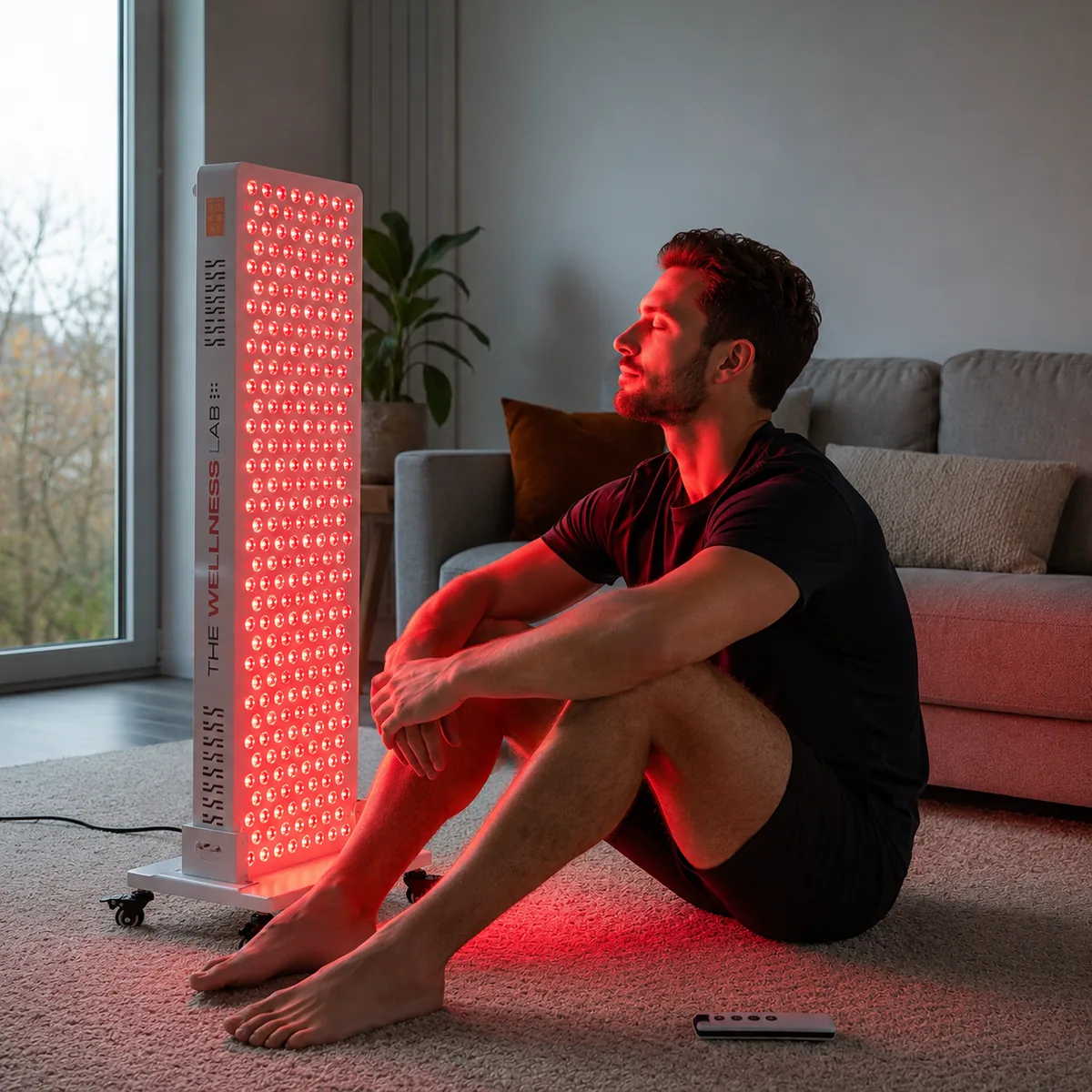
- 01Confirm the type of hair lossThe evidence is for pattern hair loss. Get patchy or sudden loss checked by a doctor first.
- 02Clear the way to the scalpRemove caps and scarves, wash out heavy oils or styling products, and part your hair over the thinning area.
- 03Face the area that mattersCrown thinning: tilt your head forward. Temples or hairline: face the panel and close your eyes behind goggles.
- 04Keep to the routineREX panels: twice a day, 15 to 25 minutes a session. Skipped weeks matter more than any single session.
- 05Protect your eyesNever look into the LEDs, and wear the goggles that come with every REX panel.
- 06Track it with photosTake a photo of the same area in the same light every 4 weeks. Hair changes slowly, and photos show what a mirror misses.
Which REX is right for hair?
REX ULTRA for the scalp on its own, REX PRO if you also want face and body sessions, REX MINI for a small patch such as the hairline.
Having red and near-infrared LEDs doesn't mean a device matches what a hair trial found: power, distance and session time decide how much light reaches the follicles. Our guide to irradiance, distance and dose explains how to compare devices.
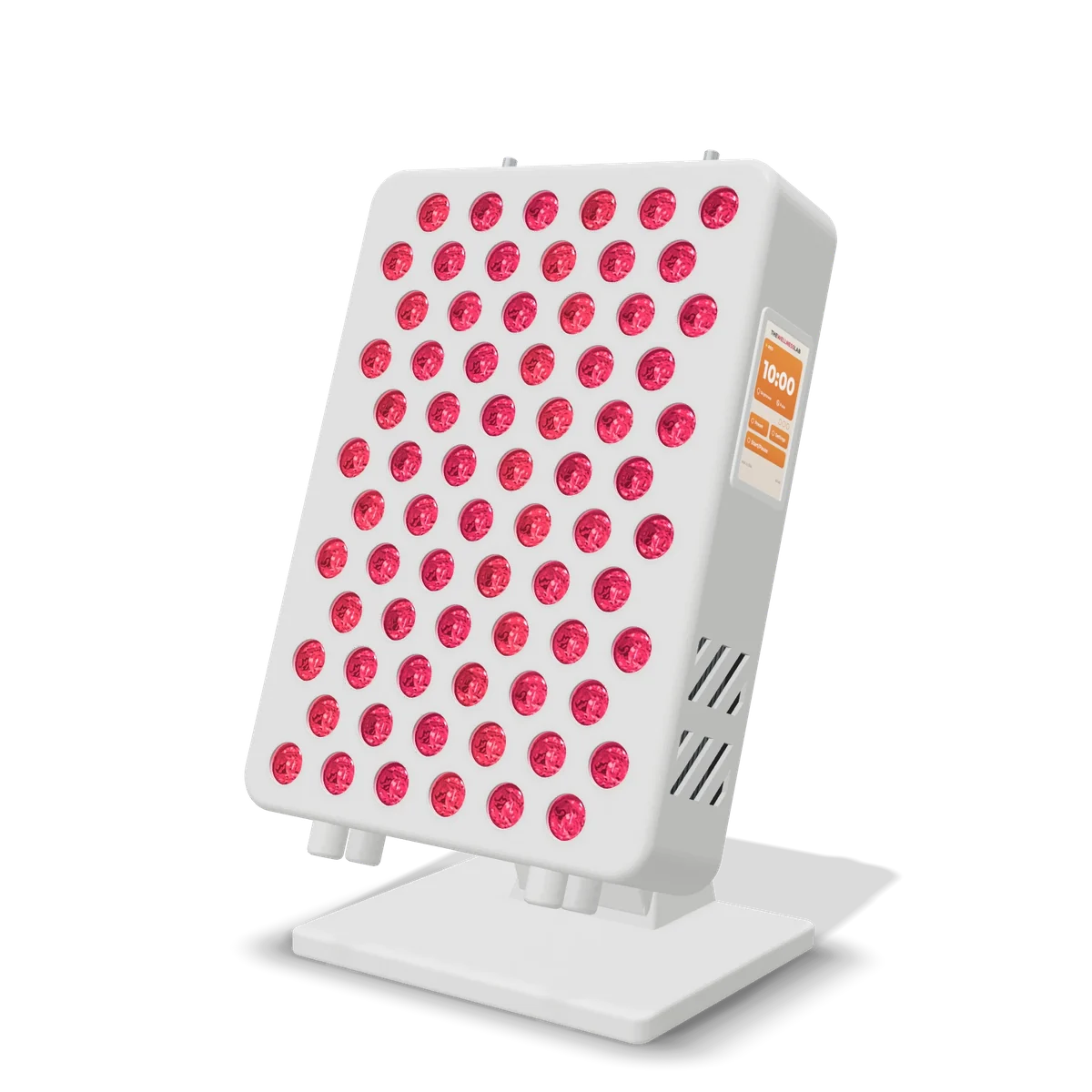
72 LEDs, 9 wavelengths, tilting desk stand
Sized for the scalp, at a desk or table.
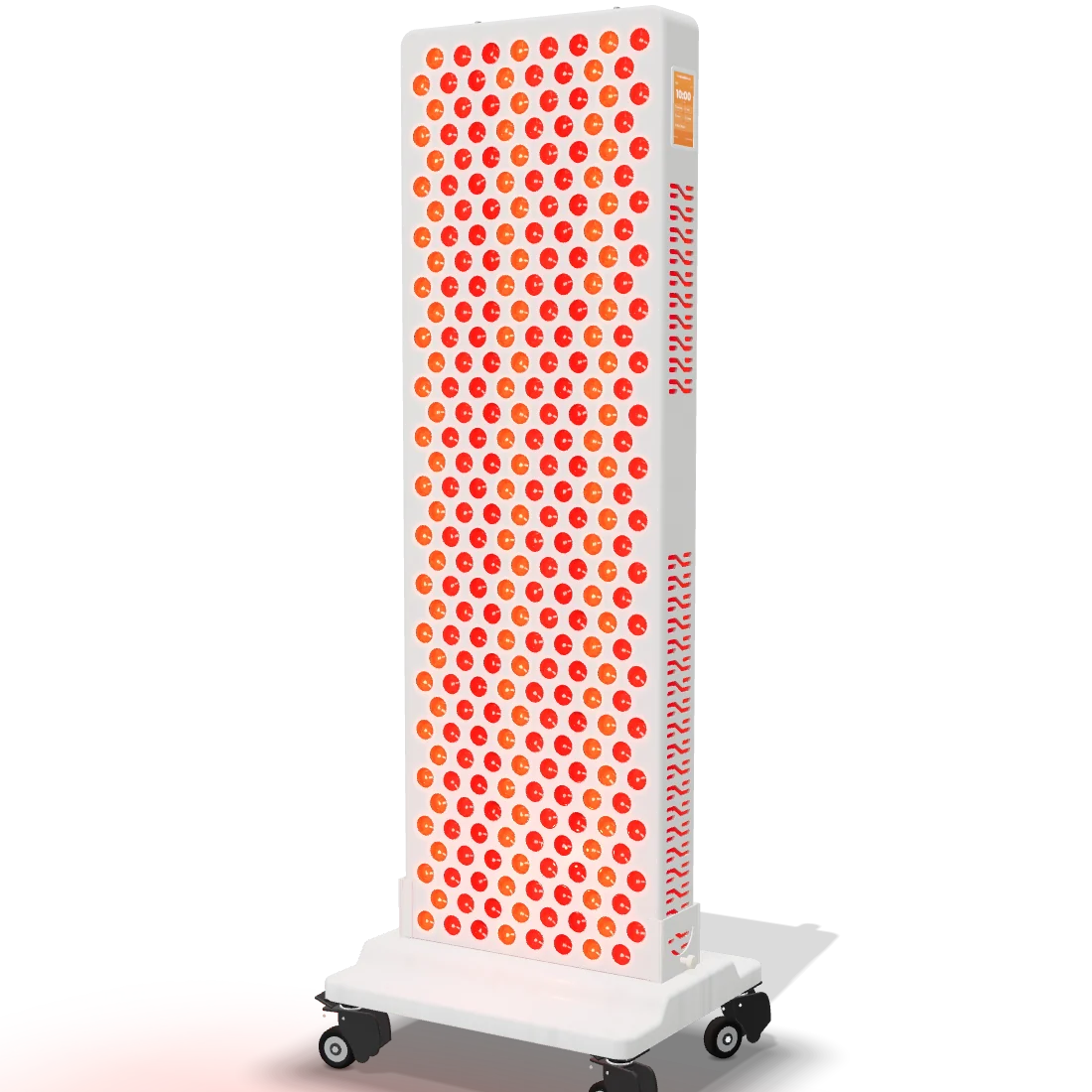
288 LEDs, 9 wavelengths, wheeled floor stand
Scalp, face and upper body in one session.
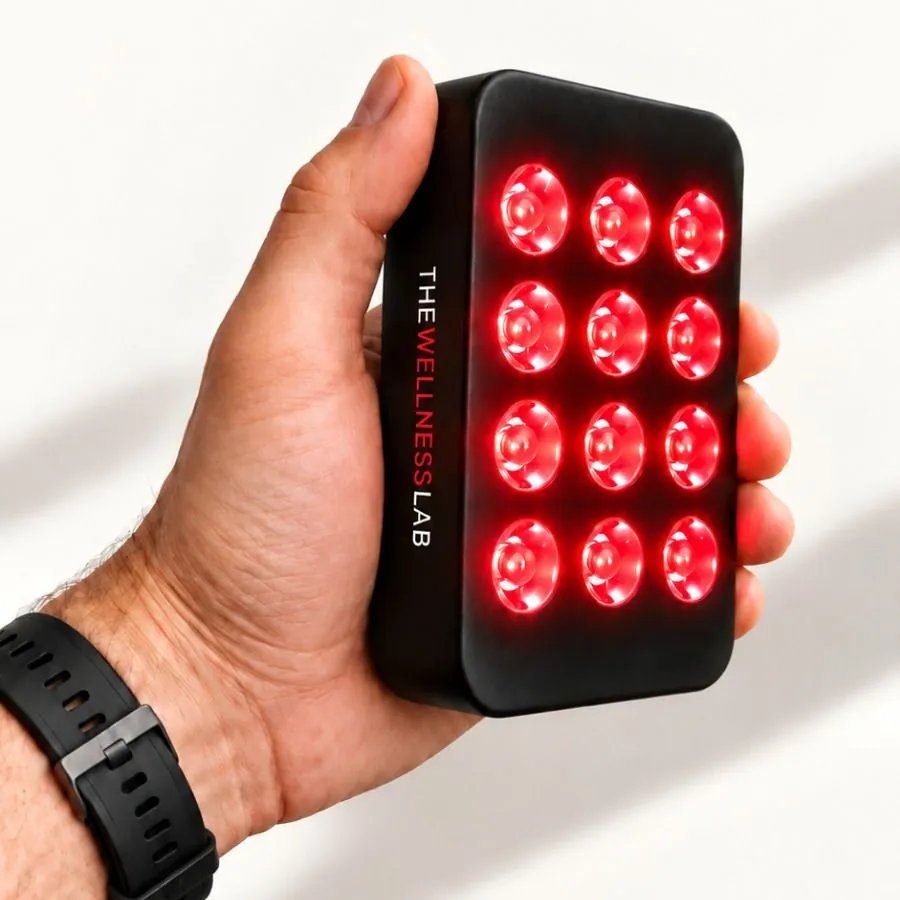
24 LEDs, 660 and 850 nm
A small area such as the hairline or temples.
Delivery is free across the UAE, and our team installs panels for you. Not sure which fits? Take the product quiz or book a 15-minute demo on WhatsApp: +971 58 586 5195.
When should you see a doctor about hair loss?
Before you start, if the hair loss doesn't look like slow, even thinning. See a doctor or dermatologist first if:
- !hair is falling out in round patches or in clumps
- !your scalp is red, scaly, itchy, painful or scarred
- !shedding started suddenly after an illness, a new medicine or a big life change
- !hair loss comes with other changes, such as tiredness, weight change or irregular periods
Check with your doctor before using any light device if you have a light-sensitivity condition, take medicine that makes your skin sensitive to light, or are unsure whether it suits you.
Frequently asked questions
How long does red light therapy take to show results on hair?
In the 2025 meta-analysis, hair density gains were larger after 20 weeks than before, so plan on about 5 months of steady use before you judge it. Results vary from person to person.
Does red light therapy work for women's hair thinning?
Pattern hair loss affects women too, and it is the type the research covers. Female thinning has several possible causes, so get it diagnosed first.
Can red light therapy help alopecia areata?
There isn't enough evidence. The 2025 review found only 50 people with alopecia areata across its studies, too few to pool. See a dermatologist for patchy hair loss.
Can I use red light therapy with my hair loss medicine?
Ask your doctor first. Some medicines make skin more sensitive to light, and your dermatologist can tell you whether light therapy fits your plan.
Do I need a cap, or will a panel work?
The trials used a range of laser and LED devices, and no study here compared caps with panels. What counts is enough light reaching the scalp, consistently. Our complete science guide explains how light works on tissue.
Is red light therapy safe for the scalp?
Use it on clean, healthy skin and protect your eyes with the goggles that come with every REX panel. Stop and see a doctor if your scalp becomes irritated.
A promising add-on for pattern hair loss, if you are patient
Moderate-certainty evidence for hair density, widely varying results, 20 weeks or more of consistency, and a diagnosis first. Start with REX ULTRA for the scalp, or compare the full REX range.
Shop REX ULTRA Compare REX WhatsApp demoSources
- Perez SM, et al. Low-level laser and LED therapy in alopecia: a systematic review and meta-analysis. Dermatologic Surgery, 2025; 51(2): 179 to 183. doi.org/10.1097/DSS.0000000000004442
- Son Y, et al. Effects of photobiomodulation on multiple health outcomes: an umbrella review of randomized clinical trials. Systematic Reviews, 2025; 14: 160. doi.org/10.1186/s13643-025-02902-3