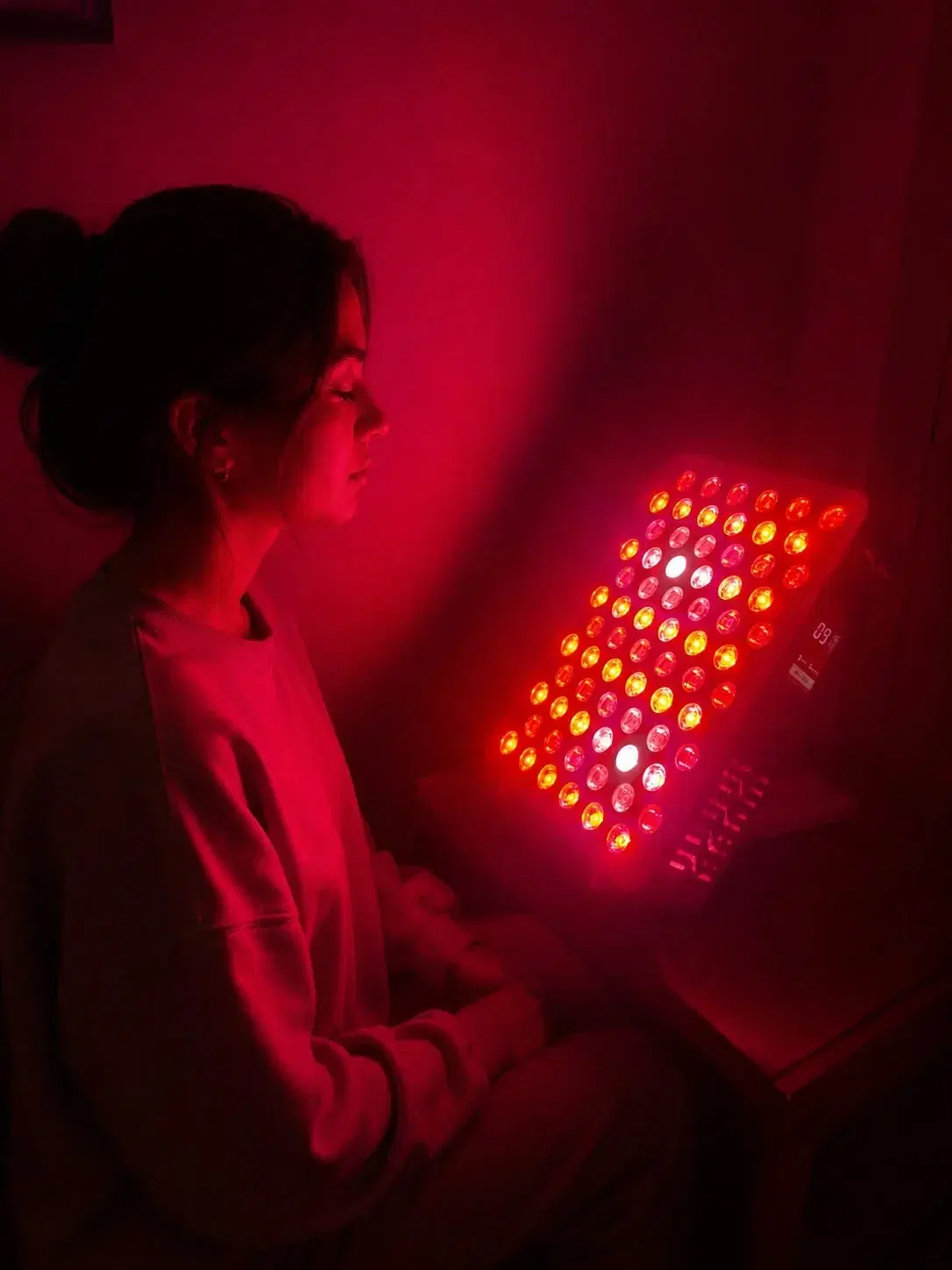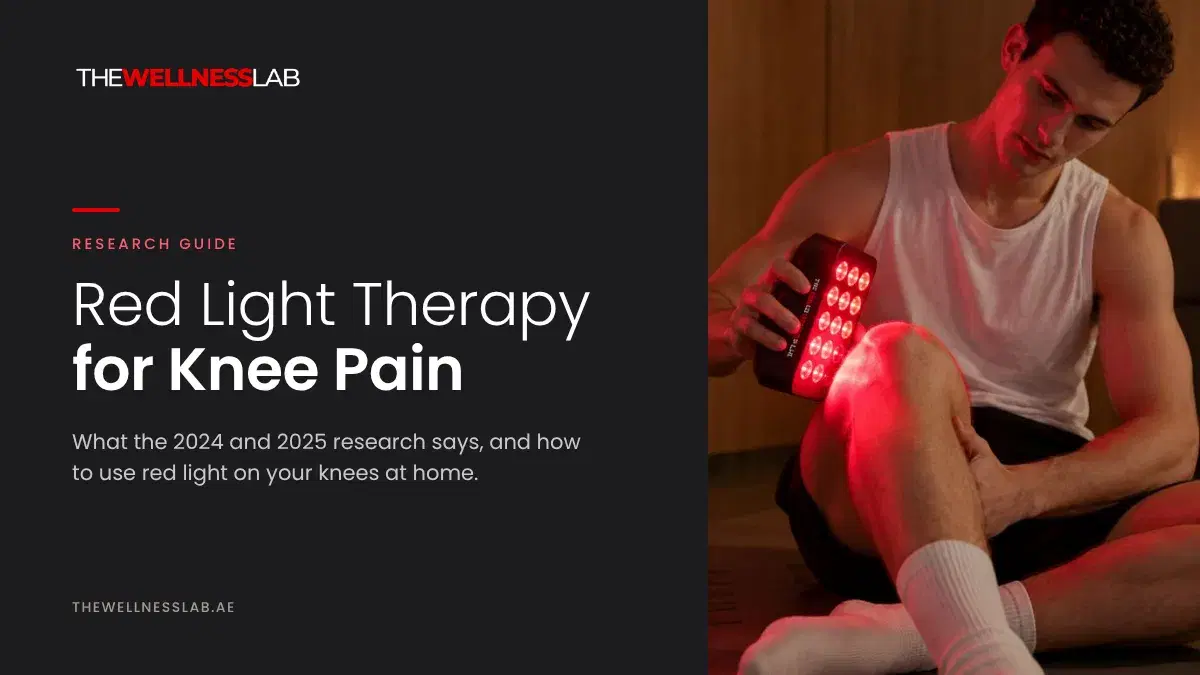
Red light therapy may help knee pain a little, mainly in knee osteoarthritis. A 2024 review of 13 trials (673 adults) found less pain after about 8 weeks, and a 2025 umbrella review rated better knee function as moderate-certainty evidence.
Use it alongside exercise, not instead of it. At home, REX MINI (AED 599) covers one knee at a time and REX ULTRA (AED 2,499) covers larger areas.
Knee osteoarthritis, 2024 review
Across those 13 trials
Of regular sessions
Certainty, 2025 umbrella review
Does red light therapy help knee pain?
Sometimes, and modestly. The clearest research is in knee osteoarthritis, the most common kind of knee arthritis. Here is what the newest reviews found.
13 trials, 673 adults with knee osteoarthritis
Less pain than sham light after about 8 weeks. No clear change in stiffness or function.
Low certainty15 meta-analyses, 204 trials, over 9,000 people, 35 health outcomes
Better function (less disability) in knee osteoarthritis: one of only 5 outcomes rated moderate certainty.
Moderate certaintyOsteoarthritis care
Therapeutic exercise and, where relevant, weight management come first. Laser therapy is not recommended, citing insufficient evidence.
GuidelineThe two reviews don't fully agree on function, which is common when trials are small and use different devices and doses. Read the results as promising, not proven.
What red light therapy can't do for your knees
It can't stand in for the basics, and the research has clear limits.
NICE puts therapeutic exercise at the core of osteoarthritis care. Its 2022 guideline doesn't recommend laser therapy, citing insufficient evidence. Reviews published since are more positive, but still not strong.
The trials measured pain, stiffness and function, not the joint itself.
The evidence is for osteoarthritis. It says little about runner's knee, tendon pain or a padel twist, so get those checked first.
Trials used specific devices at doses set by researchers, so their results don't transfer automatically to any home device, REX included.
Red or near-infrared: which light reaches the knee?
Near-infrared. It travels deeper into tissue than visible red light, which matters for a joint as large as the knee. The 2024 review compared three wavelength groups:
| Wavelength group | Evidence for knee pain | In REX devices? |
|---|---|---|
| 904 to 905 nm | Ranked best, low certainty | No |
| 785 to 850 nm | Weaker, very low certainty | Panels: 810, 830 and 850 nm. REX MINI: 850 nm |
| Multi-wavelength devices | Weaker, very low certainty | REX panels use 9 wavelengths |
No REX device uses 904 to 905 nm, and a wavelength list alone can't predict a study's result: power, distance and session time decide how much light reaches the knee. Our guide to irradiance, distance and dose shows how to compare devices.
How to use red light therapy on your knee at home
Bare skin, close to the joint, on a steady routine for about 8 weeks, alongside your exercises.
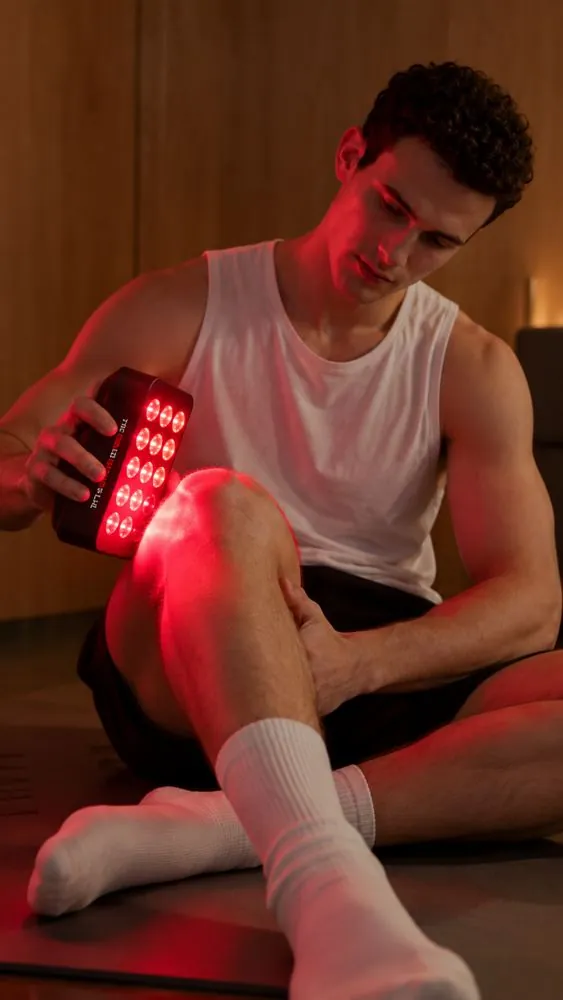
- 01Rule out an injury firstIf the knee is swollen, hot, locking or giving way, see a doctor or physiotherapist before anything else.
- 02Expose the kneeFabric blocks much of the light, so use it on clean, dry, bare skin.
- 03Cover the whole jointLight the front of the knee, then the inner and outer sides. With a panel, sit so both knees face it.
- 04Keep to the routineREX panels: twice a day, 15 to 25 minutes a session. REX MINI: hold it close to the skin and move it across the front and sides of the knee.
- 05Protect your eyesNever look into the LEDs, and wear the goggles that come with every REX panel.
- 06Stay consistent for 8 weeksThat is when the trials measured results. Once a week, note your pain (0 to 10) and how stairs and walking feel.
- 07Keep movingRed light sits alongside the exercises your physiotherapist sets, never in place of them.
Which REX is right for knee pain?
REX MINI for one knee at home or on the go, REX ULTRA for larger areas, REX PRO for legs and back together.
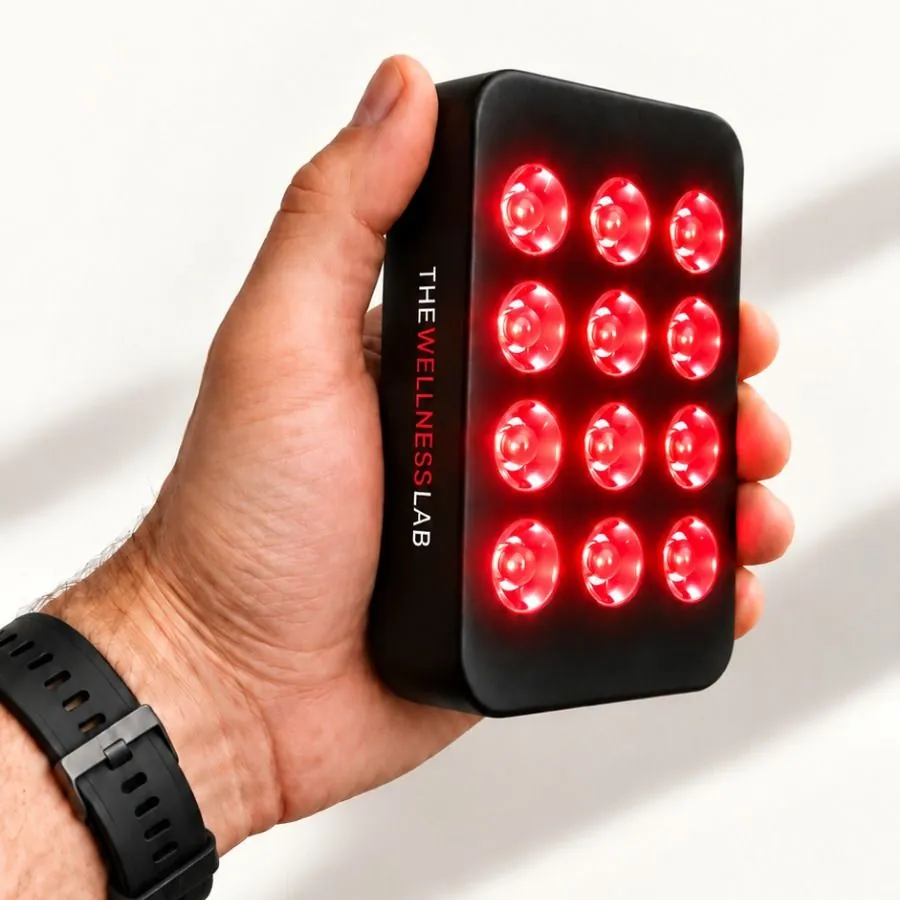
24 LEDs, 660 and 850 nm
One knee at a time, after padel, a run or travel.
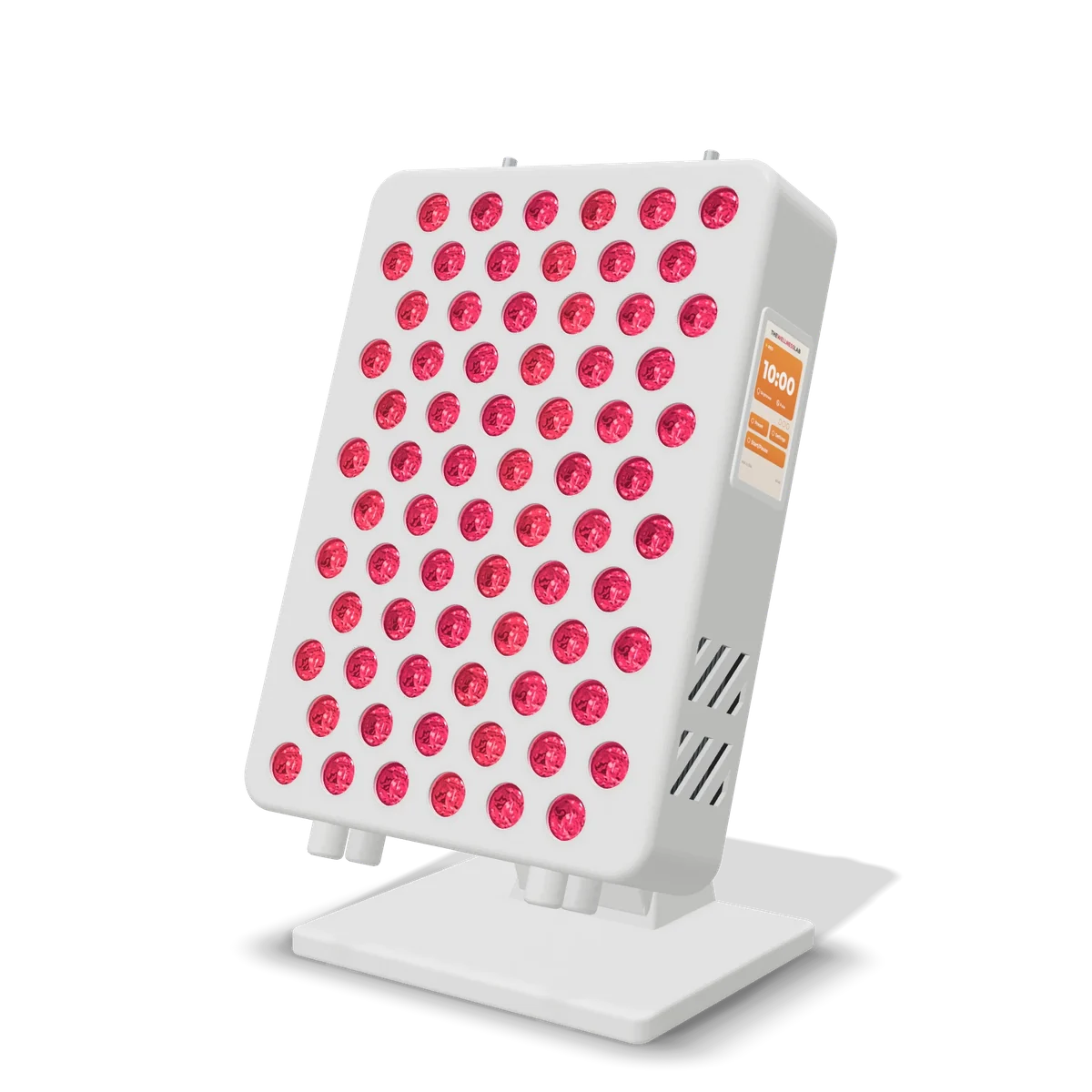
72 LEDs, 9 wavelengths, tilting desk stand
Larger areas at home.
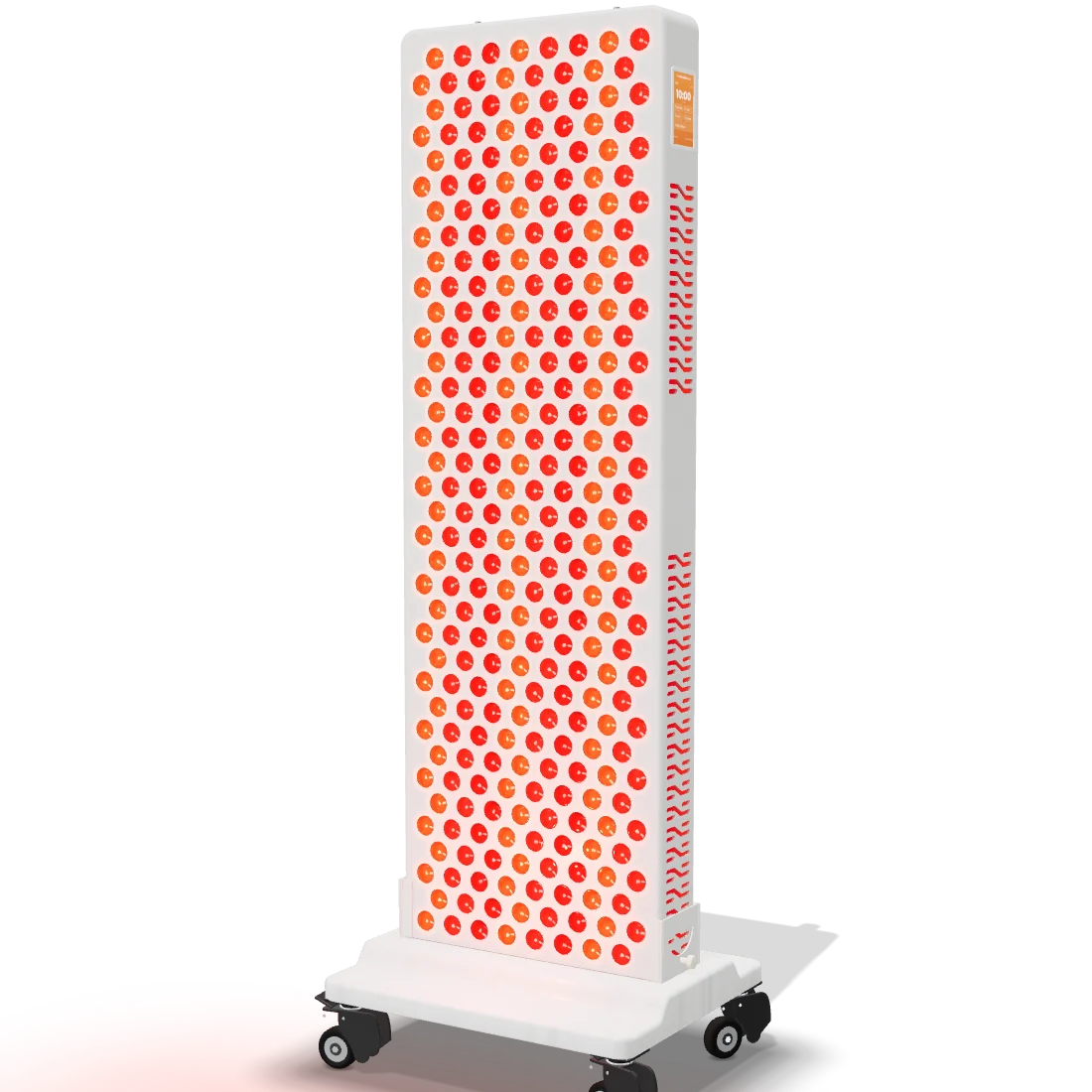
288 LEDs, 9 wavelengths, wheeled floor stand
Knees, thighs and lower back in one session.
Delivery is free across the UAE, and our team installs panels for you. Not sure which fits? Take the product quiz or book a 15-minute demo on WhatsApp: +971 58 586 5195.
When should you see a doctor about knee pain?
Before you start, if the pain followed an injury or the knee looks or feels wrong. See a doctor or physiotherapist first if:
- !the pain started with a fall, a twist or a pop, or the knee swelled quickly
- !the knee is hot, red or swollen, or you have a fever
- !it locks, catches or gives way
- !you can't put weight on it, or the pain wakes you at night
Check with your doctor before using any light device if you are pregnant, have a light-sensitivity condition, take medicine that makes your skin sensitive to light, or are unsure whether it suits you.
Frequently asked questions
How long does red light therapy take to work on knees?
The trials in the 2024 review measured results at about 8 weeks, so keep a steady routine at least that long before you judge it. Results vary from person to person.
Can red light therapy replace physiotherapy for knee pain?
No. Therapeutic exercise is the core of knee osteoarthritis care in the 2022 NICE guideline. Red light can sit alongside it, not replace it.
Does red light therapy help runner's knee or padel knee pain?
The evidence is thinner. The reviews above studied osteoarthritis, not sports injuries, so get a diagnosis first. Playing padel? Our guide to red light therapy for neck pain and padel recovery covers your routine.
Which wavelength is best for knee pain?
No wavelength has strong evidence yet. In the 2024 review, 904 to 905 nm ranked best for pain, at low certainty. Near-infrared (810 to 850 nm) reaches deeper than red, and dose matters as much as wavelength.
Can I use red light therapy on my knee every day?
The REX panel routine is twice a day, 15 to 25 minutes a session. That is our product guidance, not a medical prescription, so follow your model's instructions and your doctor's advice.
Does red light therapy repair knee cartilage?
The studies above didn't measure cartilage, so there is no evidence here that it repairs a worn knee. They measured pain, stiffness and function.
A reasonable add-on for knee osteoarthritis, with realistic expectations
Modest benefits, low to moderate certainty, about 8 weeks of consistency, and exercise as the foundation. Start with REX MINI for one knee, or compare the full REX range.
Shop REX MINI Compare REX WhatsApp demoSources
- Fan T, et al. Aging Clinical and Experimental Research, 2024; 36: 203. Systematic review and network meta-analysis of 13 trials in knee osteoarthritis. doi.org/10.1007/s40520-024-02853-0
- Son Y, et al. Systematic Reviews, 2025. Umbrella review of photobiomodulation trials across 35 health outcomes. doi.org/10.1186/s13643-025-02902-3
- NICE. Osteoarthritis in over 16s: diagnosis and management, guideline NG226, 2022. nice.org.uk/guidance/ng226