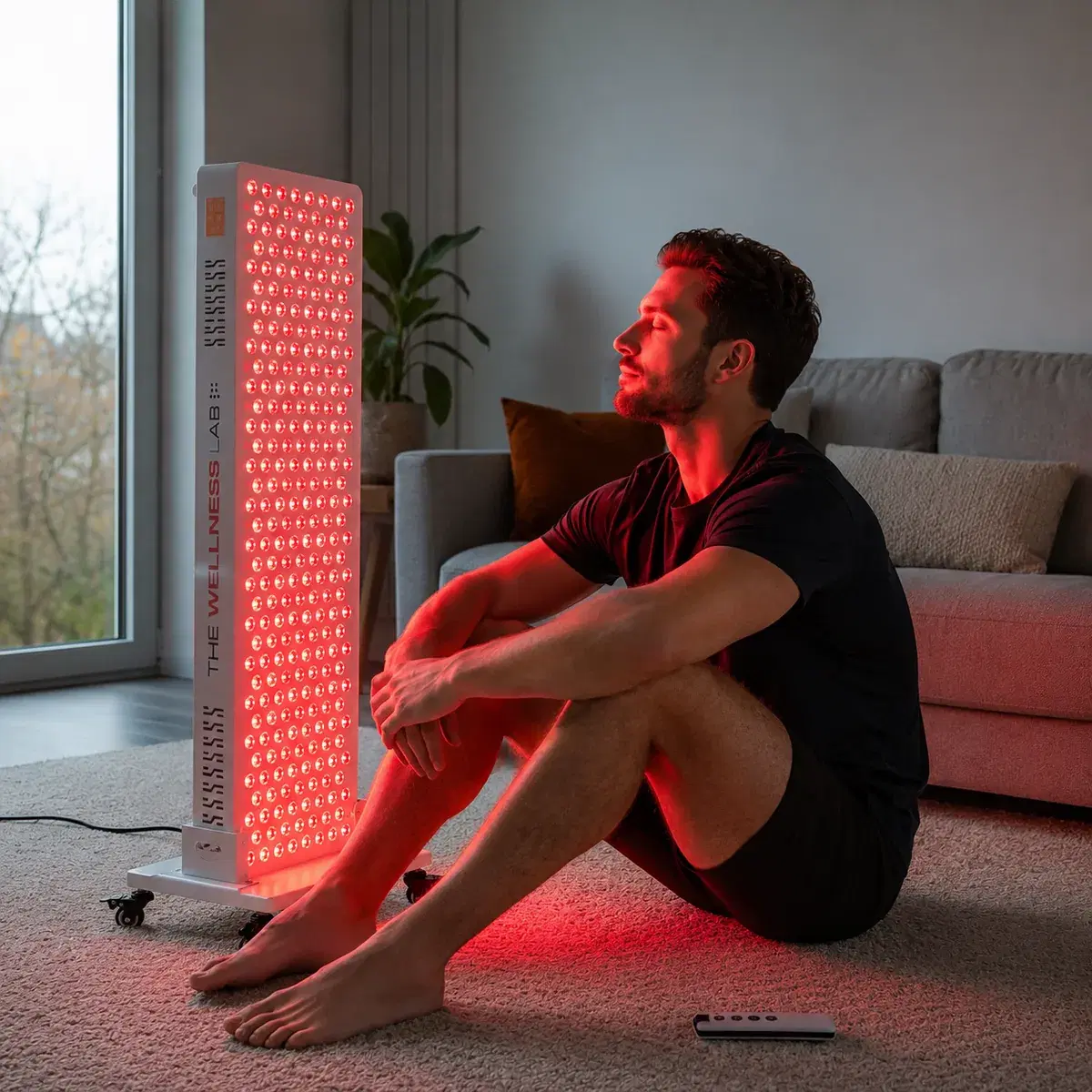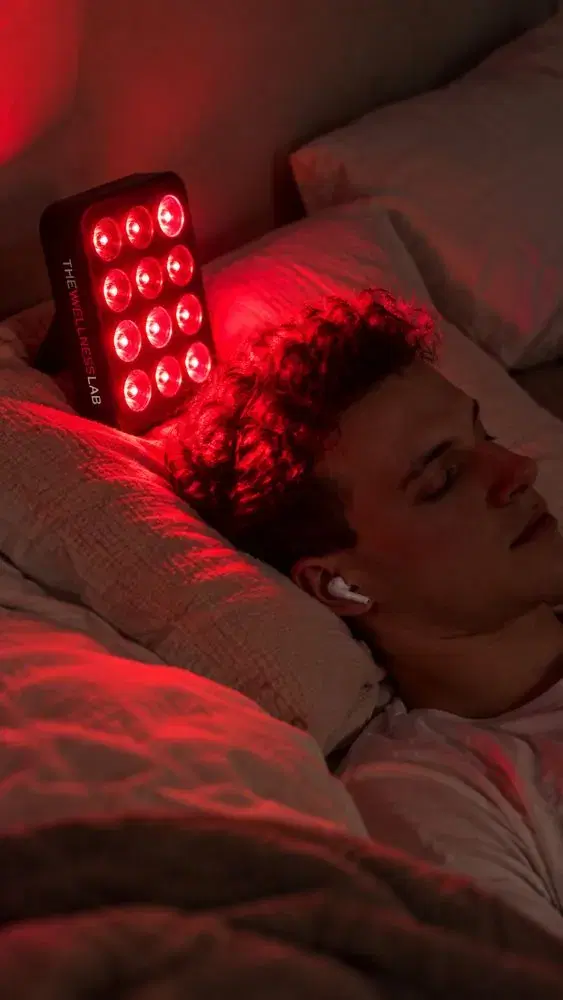
For most adults, red light therapy appears safe in the short term when used as directed. A 2026 review of 14 randomised trials in adults with chronic pain found no serious side effects, and 13 of the 14 trials reported none at all.
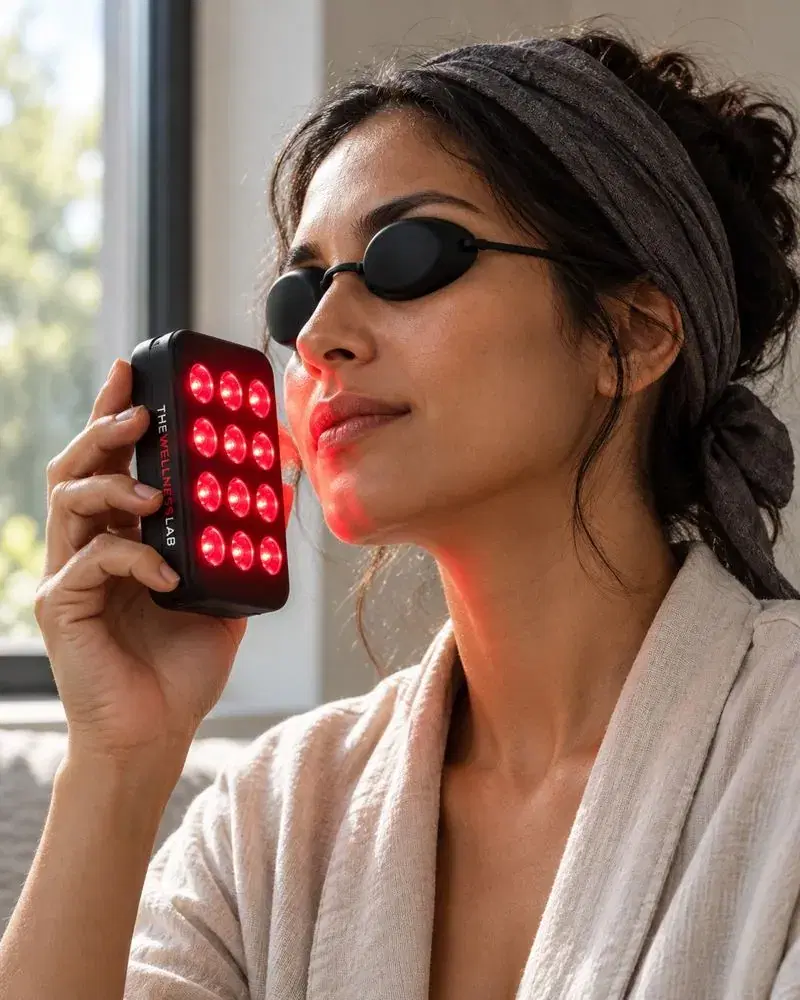
The catch: long-term effects of home devices haven't been studied, side effects are often under-reported, and your eyes need protecting. Wear goggles, never look into the LEDs, and check with a doctor first if your skin is sensitive to light.
Adults with chronic pain, 2026 review
Trials reporting no adverse events
Reported in any of the 14 trials
Per the American Academy of Dermatology
Is red light therapy safe? What the research says
In short trials, yes for most adults. Red light therapy (photobiomodulation) uses visible red and near-infrared light, not ultraviolet, and the newest research reports few and mild side effects.
14 randomised trials in adults with chronic pain (fibromyalgia, nerve pain, jaw pain and others), laser and LED, 660 to 905 nm
13 trials reported no adverse events. One reported mild, short-lived warmth, discomfort and tingling, in the real and the sham group alike. No serious events or dropouts.
Not graded15 meta-analyses, 204 trials, over 9,000 people
The largest overview of the field could not assess side effects, because the reviews it pooled did not analyse them. A gap, not a red flag.
Safety not assessedRed light therapy for skin, including at-home devices
In the short term it appears safe and the most common side effects are mild. Long-term effects on skin and hair are unknown.
GuidanceThe 2026 review itself warns that many trials reported side effects incompletely, so the picture may be less clean than the headline numbers suggest.
What side effects can red light therapy cause?
Mostly mild, short-lived skin effects. These are the ones the research and dermatologists name:
| Side effect | Who it affects | What to do |
|---|---|---|
| Mild pain or irritated skin | Some users, temporary (AAD) | Stop the session, let skin settle, restart at the shorter end of the routine |
| Warmth, tingling, mild discomfort | Reported in one 2026 review trial, in both real and sham groups | Usually passes on its own; stop if it persists |
| Darker patches (hyperpigmentation) | People with darker skin tones, who can be more sensitive (AAD) | Speak to a dermatologist before starting |
| Flare of a light-sensitive condition | People with conditions such as lupus (AAD) | Ask your doctor first |
| Reaction linked to medicine | People taking medicine that increases light sensitivity (AAD) | Check with your doctor or pharmacist |
If anything worsens or doesn't settle, stop using the device and get it checked.
Is red light therapy safe for your eyes?
Only with protection. The American Academy of Dermatology advises wearing the eye protection your device recommends, and says sunglasses are not a substitute for protective goggles.
Panels are bright. REX ULTRA, REX PRO, REX CORE and REX PRESTIGE also include a visible 480 nm blue light alongside their red and near-infrared LEDs (630, 650, 660, 670, 810, 830, 850 and 1060 nm). Near-infrared is invisible, so a panel can be emitting more than you see.
We found no 2022 or later systematic review on the eye safety of home red light panels in adults, so we see eye protection as non-negotiable. Goggles come with every REX panel. Never stare into the LEDs.
Four safety myths worth dropping
Short-term safety is reassuring. These shortcuts are not.
None of the studies above tested going past a device's routine. Stick to the instructions: for REX panels, twice a day, 15 to 25 minutes.
Light-sensitive skin, some medicines and darker skin tones can react. That is why dermatologists suggest a check first for some people.
Trials used set devices and doses. Power, distance and time decide how much light you get, so no home device, REX included, automatically matches a study.
They are not. The AAD says long-term effects on skin and hair are unknown, and the biggest 2025 review could not assess side effects at all.
Who should check with a doctor before using red light?
Anyone in these groups should get medical advice before the first session:
- !you have a darker skin tone and want to use red light on your face or visible skin
- !you have lupus or another condition that makes your skin sensitive to light
- !you take medicine that increases sensitivity to light
- !you are pregnant, have a diagnosed health condition, or have a mole or patch of skin that is changing
- !you have an eye condition or have had eye surgery
If you are unsure, ask first.
How to use red light therapy safely at home
Read the manual, protect your eyes, use bare skin and keep to the routine.
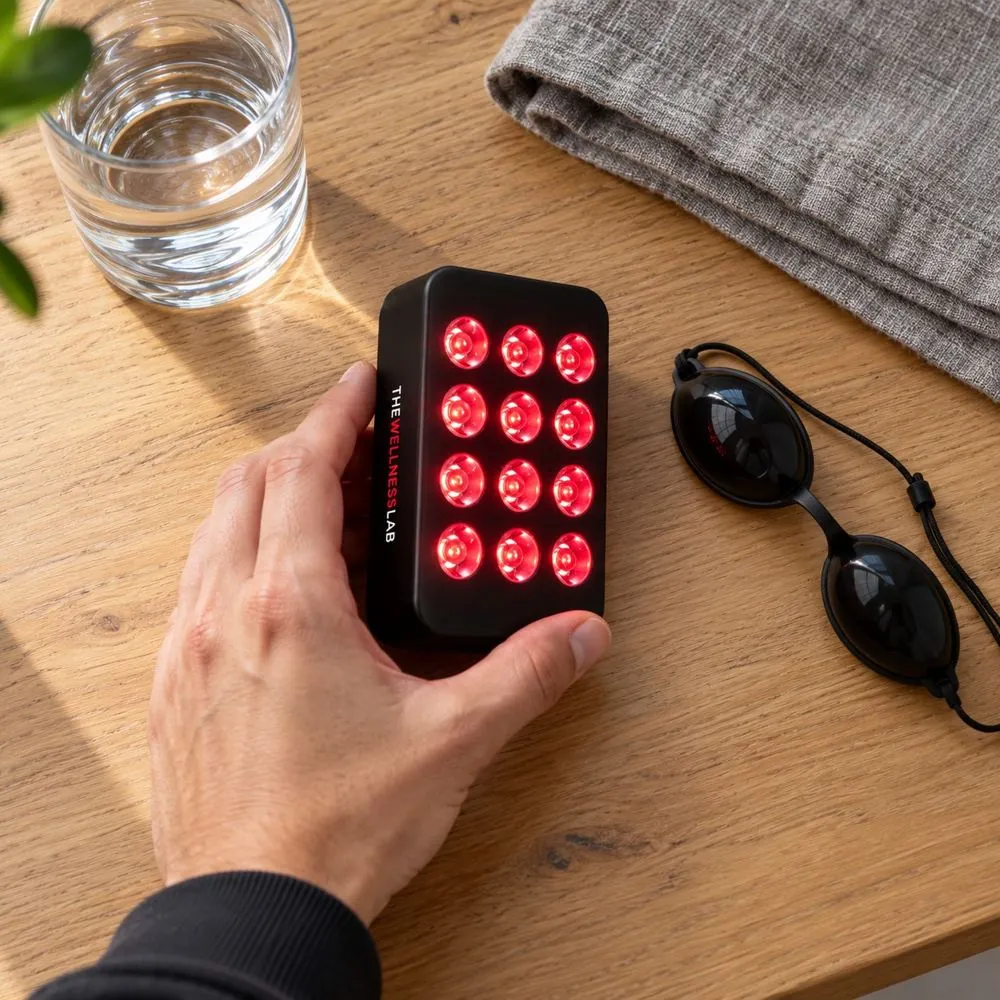
- 01Read your device's instructionsDistance, session time and positioning differ between devices. Follow the manual for your model.
- 02Put the goggles onUse the goggles supplied, not sunglasses, and never look directly into the LEDs.
- 03Start with clean, dry, bare skinFabric blocks much of the light. Remove make-up from the area you are lighting.
- 04Begin at the short endFor REX panels the routine is twice a day, 15 to 25 minutes. Start at 15 minutes and see how your skin responds.
- 05Watch your skinMild warmth can happen. Stop if you get pain, irritation or darker patches, and speak to a doctor if it doesn't settle.
- 06Keep it in its laneUse red light alongside your doctor's or physiotherapist's plan, never in place of it.
For the full daily set-up, see our guide to red light therapy at home. To compare power and distance between devices, read irradiance, distance and dose.
Which REX device suits a careful start?
REX MINI for small areas, REX ULTRA for the face or upper body at a desk, REX PRO for larger areas. Every REX panel comes with goggles.
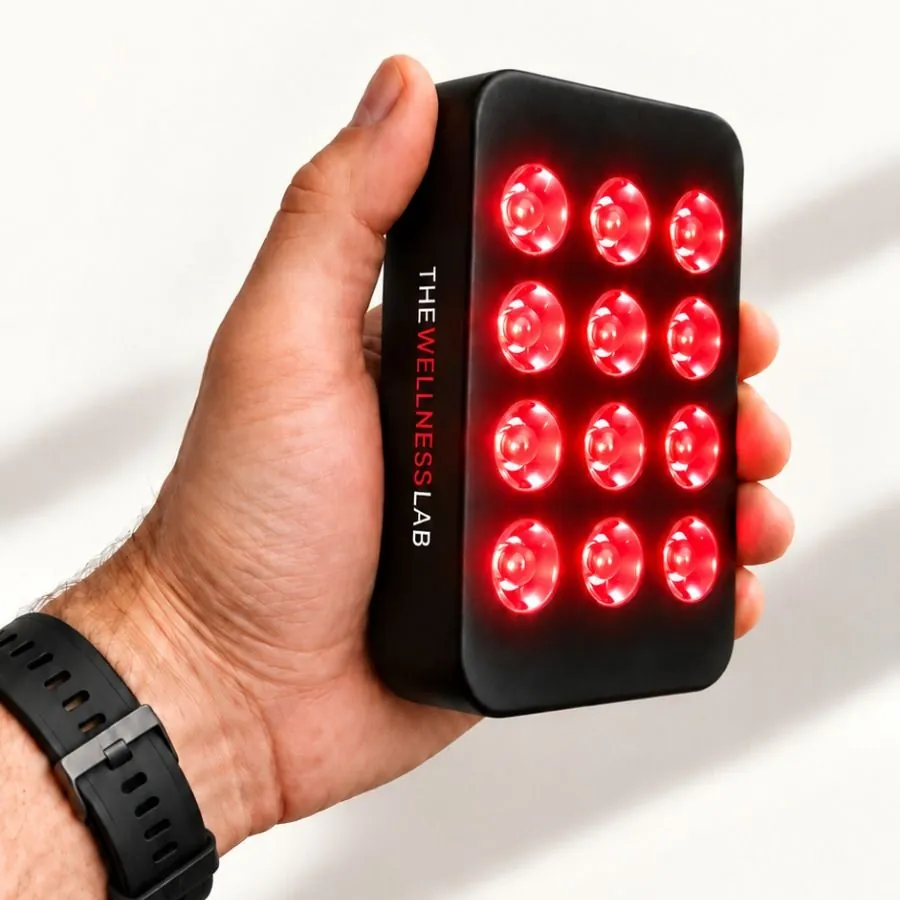
24 LEDs, 660 and 850 nm
Small, targeted areas such as a knee, neck or jaw.
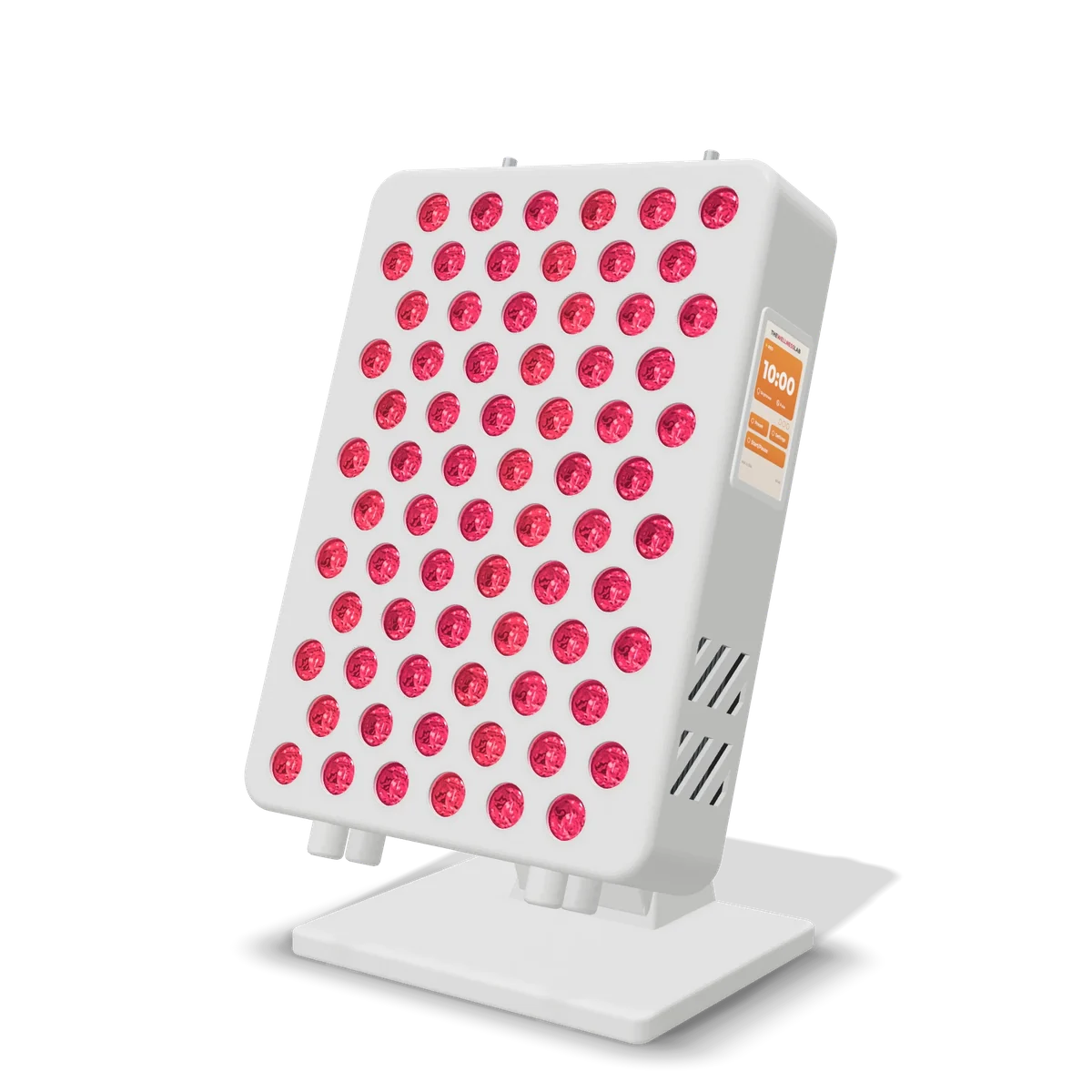
9 wavelengths, 480 to 1060 nm
Face and upper body, seated at a desk.
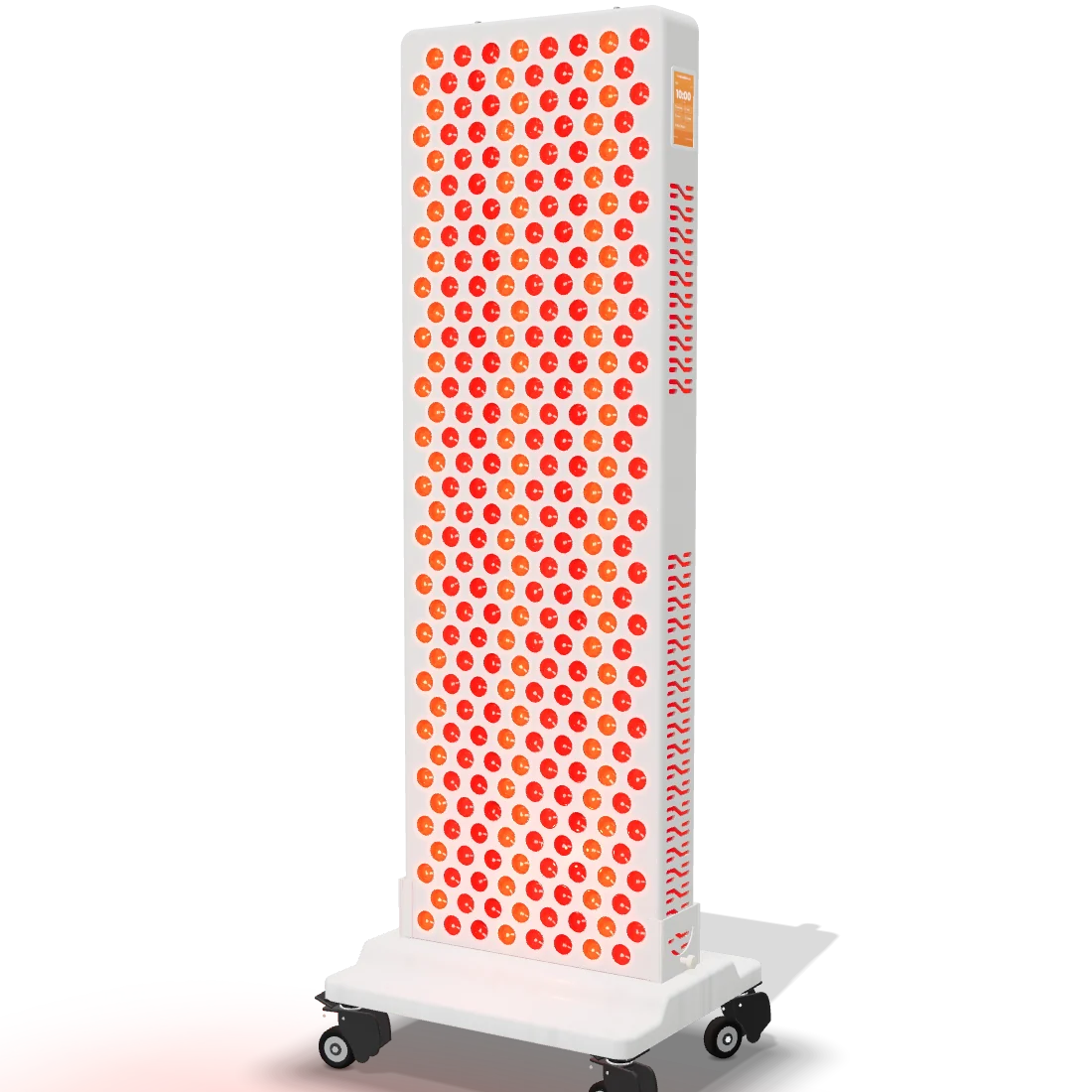
9 wavelengths, 480 to 1060 nm
Back, legs and larger areas in one session.
Delivery is free across the UAE, and our team installs panels for you. Not sure which fits? Take the product quiz, compare the full range, or book a 15-minute demo on WhatsApp: +971 58 586 5195.
Frequently asked questions
Is it safe to use red light therapy every day?
In short trials, regular sessions caused few and mild side effects in adults. For REX panels the routine is twice a day, 15 to 25 minutes. That is product guidance, not a prescription, and long-term daily use hasn't been studied.
Can red light therapy burn your skin?
The most common reported effects are mild: temporary pain, irritation, warmth or tingling. Keep to your device's distance and time, and stop if your skin feels hot or sore.
Does red light therapy cause skin cancer?
Red and near-infrared light are not ultraviolet, the light linked to sunburn. Even so, long-term effects of home devices are unknown, so get any changing mole checked by a doctor and don't light it.
Can red light therapy damage your eyes?
Eye research on home panels is limited. Wear the supplied goggles every session, not sunglasses, and never look into the LEDs.
Is red light therapy safe for darker skin?
It can be used, but the American Academy of Dermatology notes darker skin can be more sensitive and may develop darker patches. See a dermatologist before starting.
Can I use red light therapy if I take medication?
Some medicines make skin more sensitive to light. Ask your doctor or pharmacist before your first session.
Low risk in the short term, if you follow the rules
Goggles on, bare skin, the routine in the manual, and a doctor's check first if your skin is sensitive to light. Long-term safety is still an open question, so use it sensibly.
Shop REX Compare with the quiz WhatsApp demoSources
- Ferreira LMA, et al. Frontiers in Integrative Neuroscience, 2026; 20: 1717372. Photobiomodulation in chronic pain: a systematic review of randomized clinical trials. doi.org/10.3389/fnint.2026.1717372
- Son Y, et al. Systematic Reviews, 2025; 14: 160. Effects of photobiomodulation on multiple health outcomes: an umbrella review of randomized clinical trials. doi.org/10.1186/s13643-025-02902-3
- American Academy of Dermatology. Red light therapy, public guidance page, last updated 13 September 2024. aad.org/public/cosmetic/safety/red-light-therapy