Red light therapy may help sleep quality a little, but the evidence is early. A 2026 review of 5 trials (240 adults) found sleep quality scores improved by 1.25 points more than sham light, with a wide margin of error.
Timing matters too: a 2023 trial found an hour of red room light before bed made people more alert, not sleepier. So use your session earlier in the evening, then dim the lights. REX MINI (AED 599) and REX ULTRA (AED 2,499) fit an evening routine at home.
Randomised, against sham light
With health conditions, 2026 review
PSQI questionnaire, wide range
In all 5 trials
Does red light therapy help you sleep?
Possibly, a little, and mostly in people whose sleep is disturbed by another health condition. Three recent papers give the clearest picture, and one of them cuts the other way.
5 trials, 240 adults: kidney patients on dialysis, chronic insomnia, dry mouth, major depression
Better sleep quality scores than sham (1.25 points). The gain showed in trials of 4 weeks or less, not in longer ones.
Limited evidence17 human studies of light applied to the head
Many reported better sleep, but most were small, unblinded and self-reported, and some people slept worse or had side effects.
Early research114 adults: 57 with insomnia symptoms, 57 healthy sleepers
One hour of red room light before bed raised alertness and negative mood. Healthy sleepers slept about 386 minutes against 446 in darkness.
Cuts againstThe 2026 authors call their result encouraging but say it should be read with caution: every trial was judged at high risk of bias, and most measured sleep by questionnaire rather than in a sleep lab.
What red light therapy can't promise for sleep
Plenty of sleep claims online go further than the research does.
The average gain was small, and in trials longer than 4 weeks it wasn't significant. It may support better sleep; it won't switch sleep on.
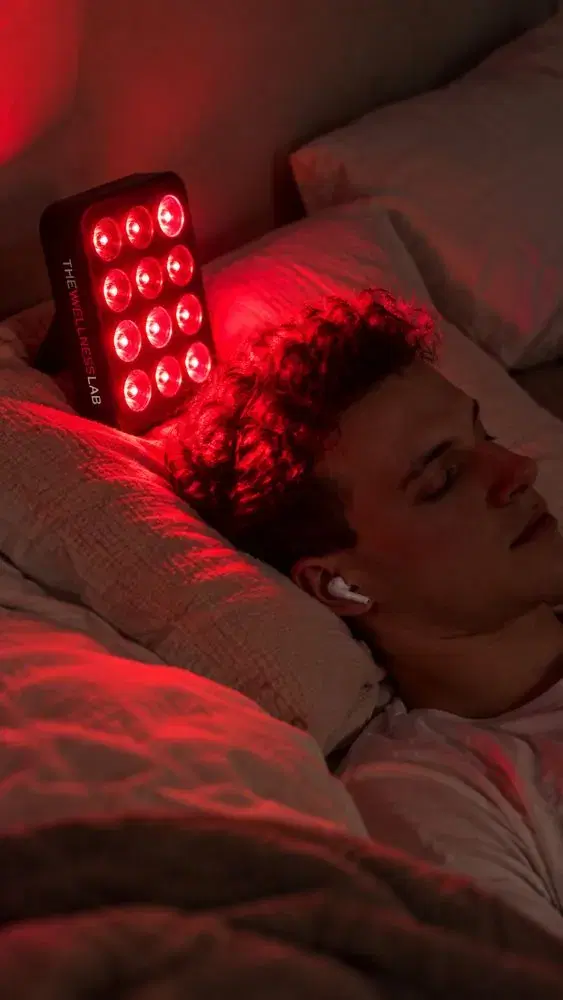
In the 2023 trial, red light right before bed made people more alert and anxious. A strong session belongs earlier in the evening.
A dim red night light changes the mood of a room. Therapy research uses set doses of light on skin or scalp, which is a different thing.
Trials used lasers, headbands and goggles at doses set by researchers, so their results don't transfer automatically to any home device, REX included.
Which light did the sleep studies use?
Mostly near-infrared, on specific body areas, at set doses. Wavelengths ranged from 360 to 850 nm across the 5 pooled trials. Here is how they compare with REX:
| Study and people | Light used | In REX devices? |
|---|---|---|
| Dialysis patients (2024) | 830 nm laser on acupoints and palms | Panels: 830 nm |
| Dry mouth (Ferrandez) | 810 nm laser on the salivary glands | Panels: 810 nm |
| Major depression (2025) | 850 nm headband, pulsed at 40 Hz | 850 nm yes; 40 Hz pulsing not claimed |
| Major depression (Noda) | 360 to 400 nm goggles, 3 hours a day | No |
| Insomnia and healthy (2023) | Red room light, peak 625 nm, 1 hour before bed | Closest: 630 nm, but a panel is not room lighting |
A shared wavelength doesn't mean a device matches a study's result: power, distance, session time and where the light lands all change the dose. Our guide to irradiance, distance and dose explains how to compare devices.
How to fit red light therapy around sleep
Finish your session early, wind down in dim light, and judge it after about 4 weeks.
- 01Get the basics right firstRegular sleep and wake times, a cool dark bedroom and less late caffeine. For ongoing insomnia, the 2026 review notes that cognitive behavioural therapy for insomnia (CBT-I) has strong trial support.
- 02Move your session earlierOur suggestion, based on the 2023 trial: finish an evening session at least an hour before lights out, or use the morning slot instead.
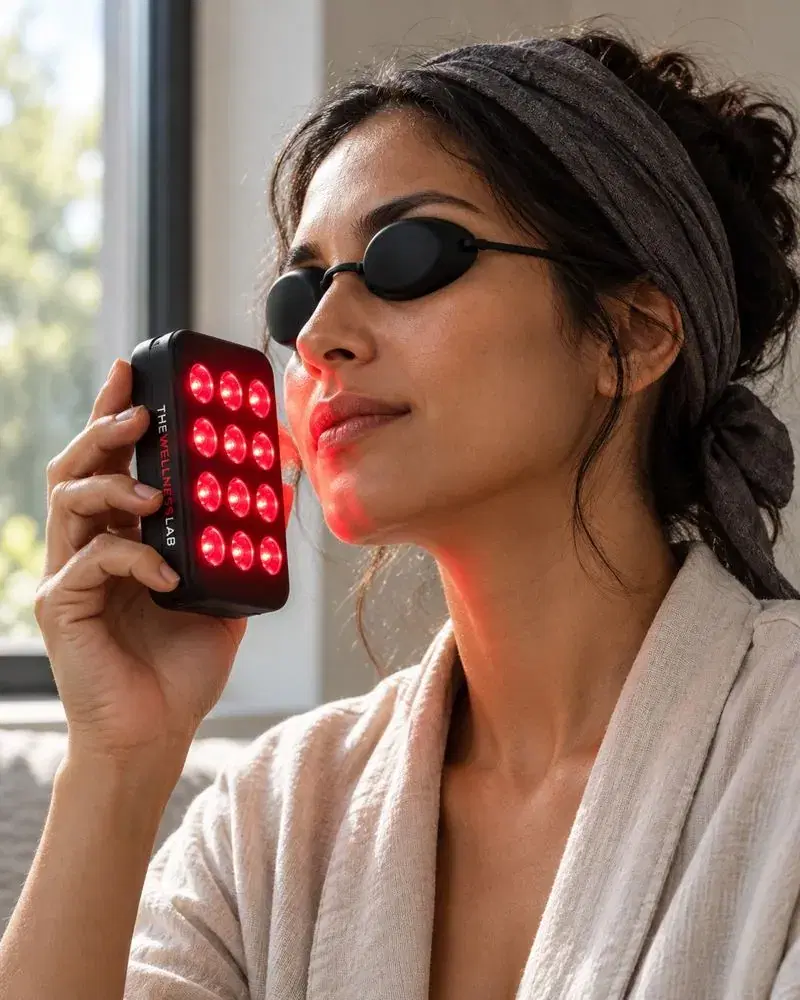
- 03Protect your eyesNever look into the LEDs, and wear the goggles that come with every REX panel.
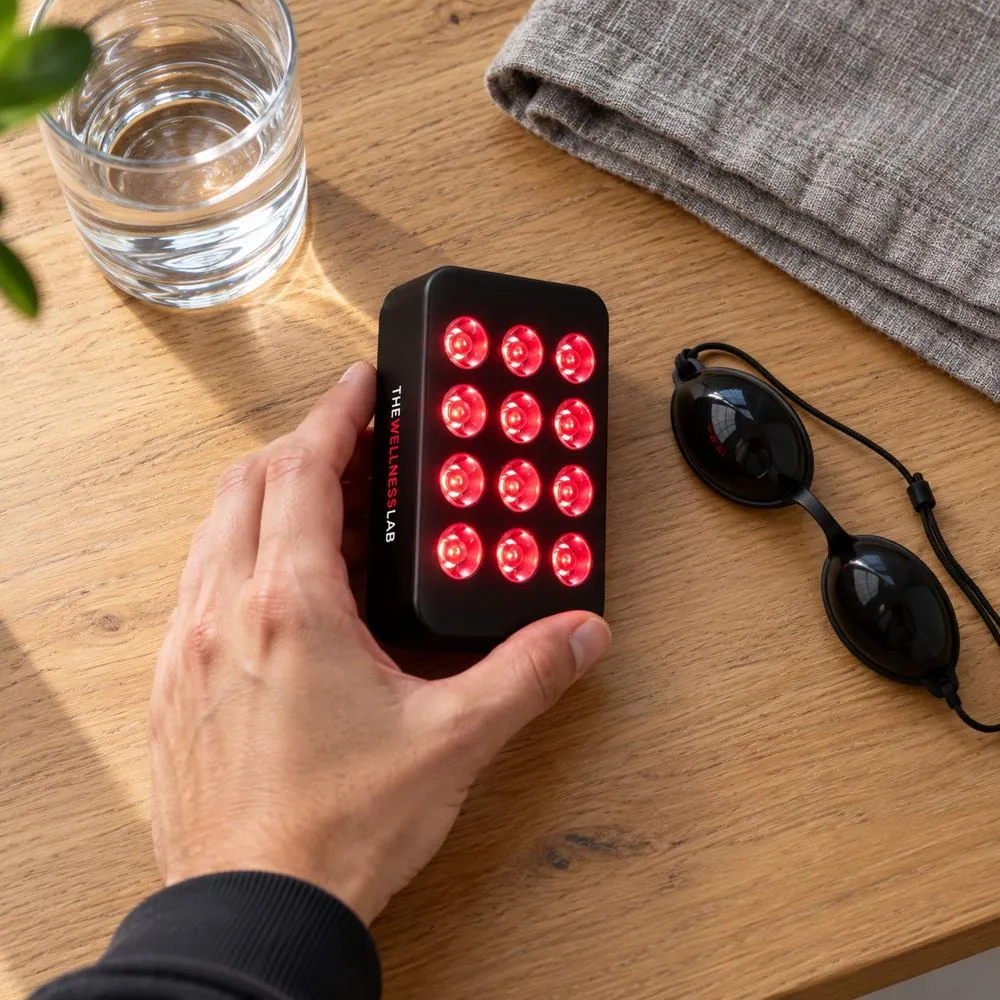
- 04Keep to the routineREX panels: twice a day, 15 to 25 minutes a session. REX MINI: hold it close to bare skin and move it slowly over the area.
- 05Then go dimAfter your session, lower the lights and put screens away so the rest of the evening stays calm.
- 06Never fall asleep with a device onSwitch it off and put it away before you get into bed.
- 07Track it for 4 weeksEach morning, note when you fell asleep, night wakings and how rested you feel. The gain in the review showed in trials of 4 weeks or less.
Want a full daily plan? Our guide to red light therapy at home sets out morning and evening sessions.
Which REX suits an evening routine?
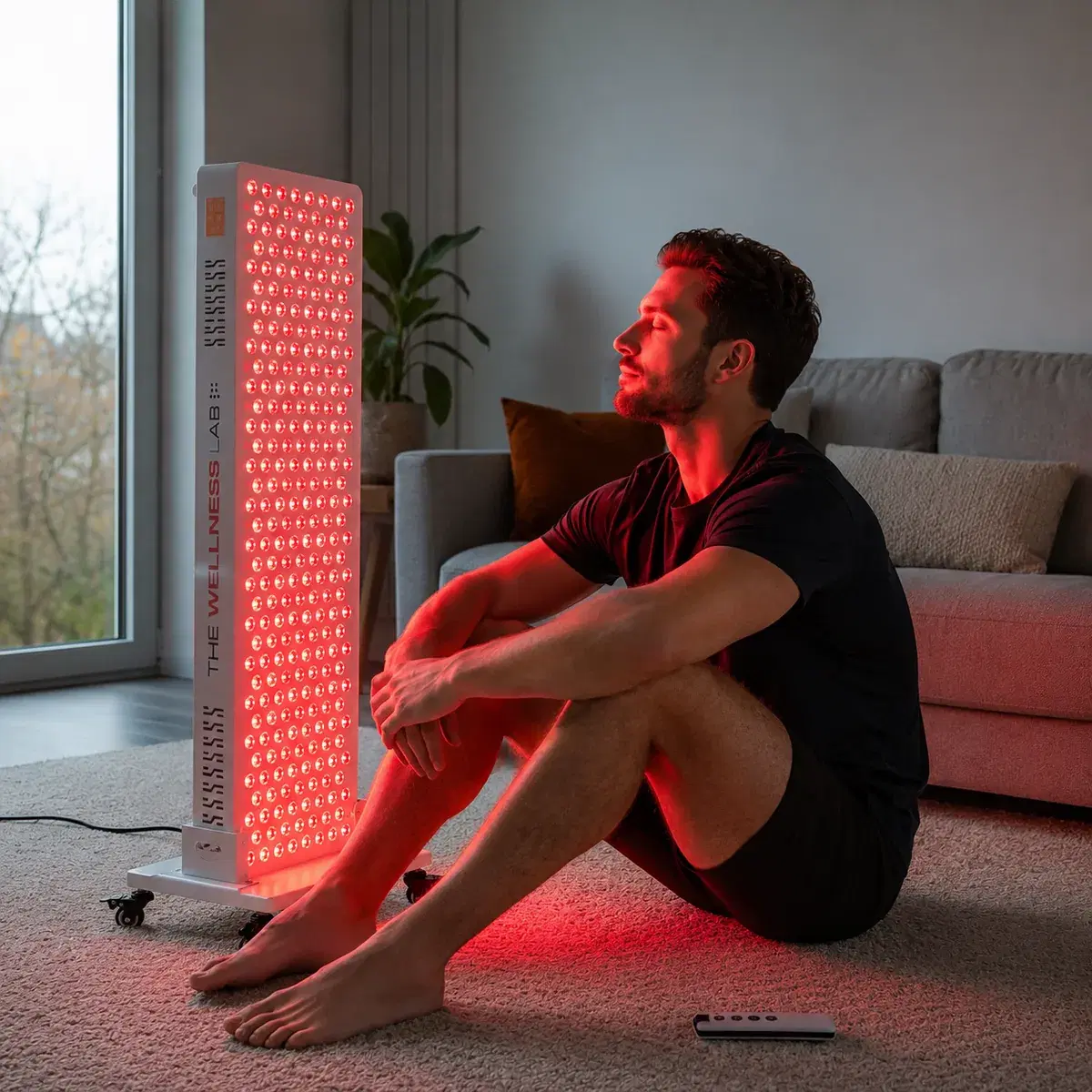
REX MINI for a quick session on one area, REX ULTRA for the face, neck and chest at a desk, REX PRO for the upper body in one go.
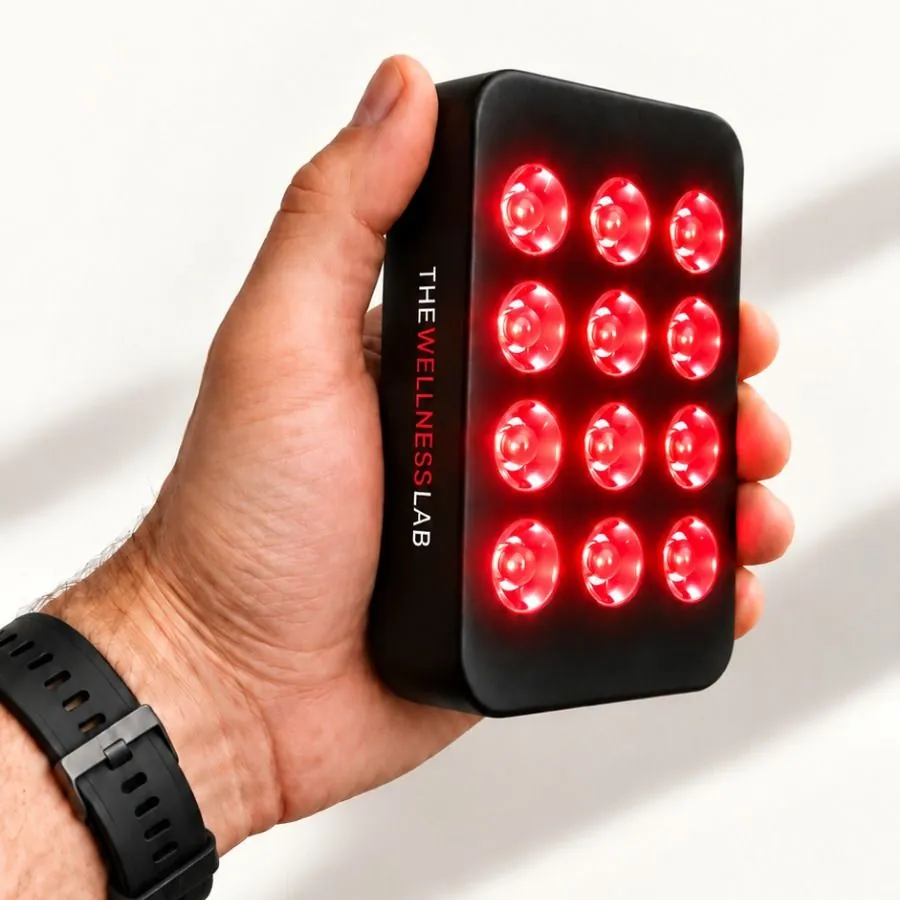
24 LEDs, 660 and 850 nm
Small, quiet and easy to put away before bed.
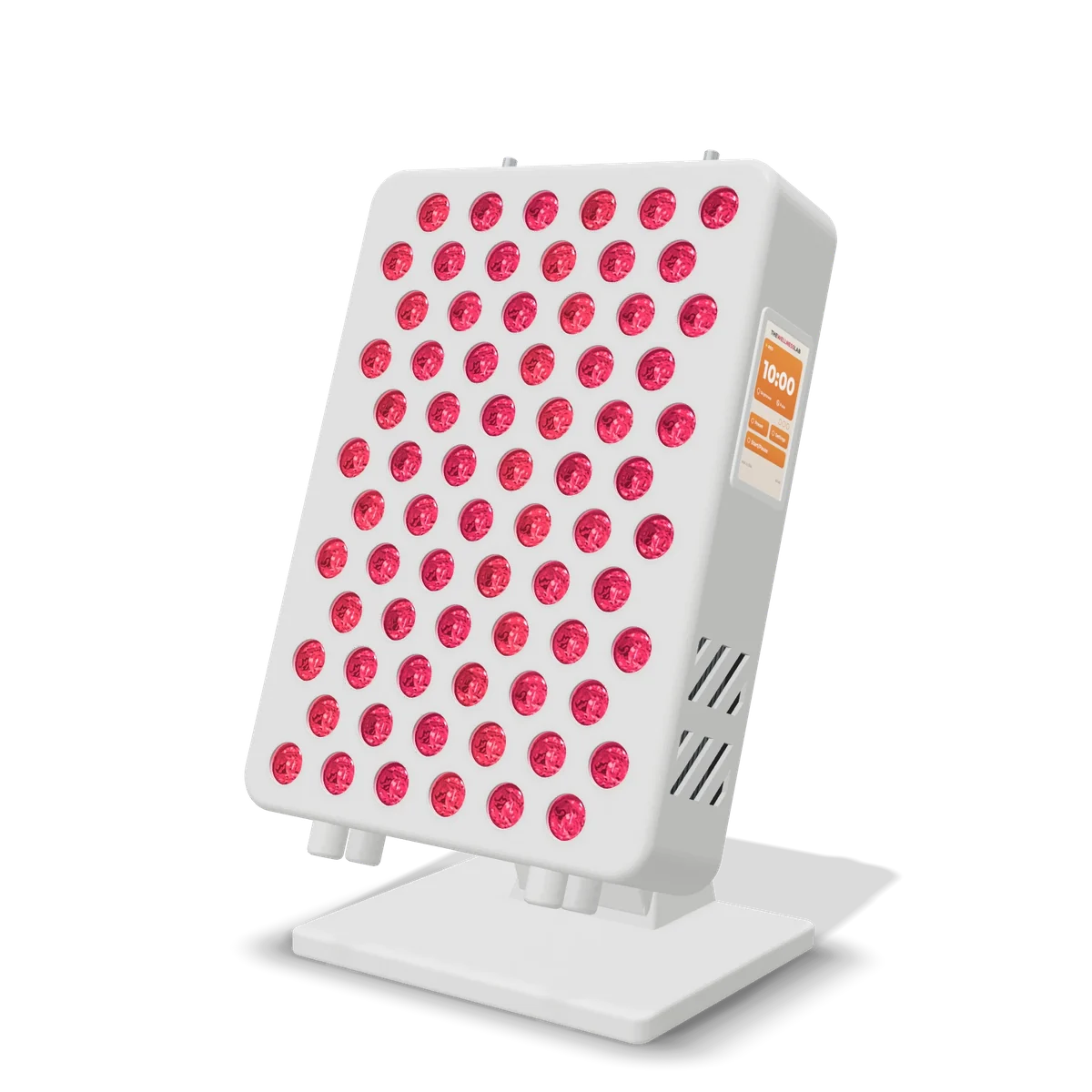
72 LEDs, 9 wavelengths, tilting desk stand
An early evening session at your desk or dressing table.
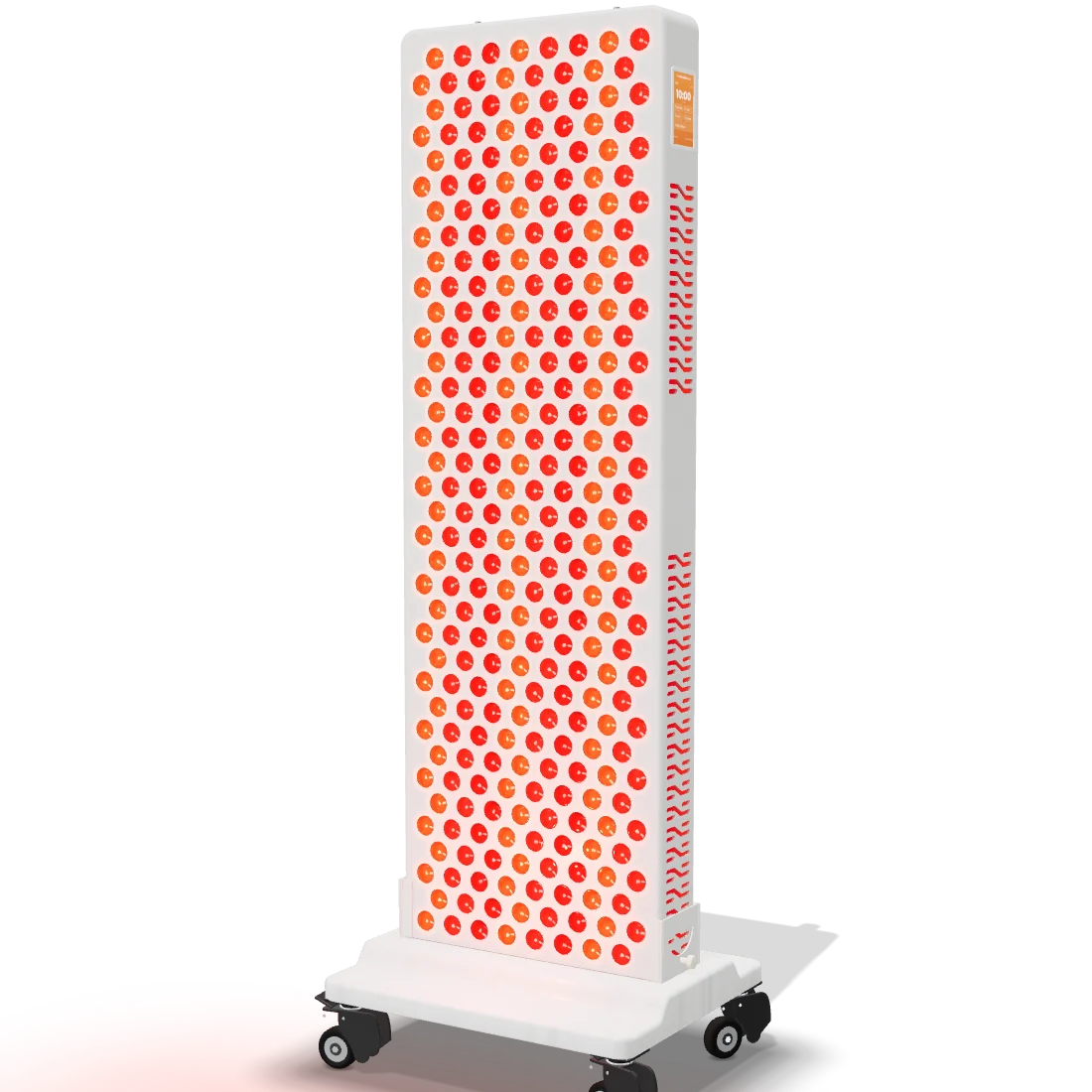
288 LEDs, 9 wavelengths, wheeled floor stand
Upper body in one session after work or training.
Delivery is free across the UAE, and our team installs panels for you. Not sure which fits? Take the product quiz or book a 15-minute demo on WhatsApp: +971 58 586 5195.
When should you see a doctor about sleep?
Poor sleep can have causes a light device won't touch. See a doctor first if:
- !you struggle to fall or stay asleep most nights for more than a few weeks
- !someone notices loud snoring, gasping or pauses in your breathing
- !you feel sleepy while driving or nod off during the day
- !low mood, worry or pain is keeping you awake
Check with your doctor before using any light device if you have a light-sensitivity condition, take medicine that makes your skin sensitive to light, or are unsure whether it suits you.
Frequently asked questions
Should I use red light therapy right before bed?
We suggest not. In a 2023 trial, an hour of red light just before bed raised alertness and anxiety. Finish your session at least an hour before lights out, then keep the room dim.
Does red light therapy increase melatonin?
None of the studies above measured melatonin, so we make no melatonin claim. The 2026 review measured sleep quality with a questionnaire.
Is a red night light the same as red light therapy?
No. A dim red bulb is room lighting. Red light therapy uses a set dose of light on bare skin from close range, which is what the trials studied.
How long does red light therapy take to help sleep?
In the 2026 review, the gain showed in trials lasting 4 weeks or less. Give a steady routine about 4 weeks before you judge it, and expect results to vary.
Can red light therapy replace sleep medication?
No. Never stop or change prescribed medicine without your doctor. For ongoing insomnia, CBT-I is the approach with the strongest trial support.
Is it better to use red light therapy in the morning or evening?
There is no trial comparing the two for sleep. If evening sessions leave you wired, move them to the morning.
A small, uncertain sleep benefit, so get the timing right
Early trials suggest red light therapy may support better sleep quality, but the evidence is limited. Keep sessions earlier in the evening, wind down in dim light, and build on good sleep habits.
Shop REX MINICompare REXWhatsApp demoSources
- Vital de Azevedo WM, et al. Photobiomodulation and sleep quality: systematic review and meta-analysis. Lasers in Medical Science, 2026; 41: 122. doi.org/10.1007/s10103-026-04913-5
- Gaggi NL, et al. Enhancing sleep, wakefulness, and cognition with transcranial photobiomodulation: a systematic review. Frontiers in Behavioral Neuroscience, 2025; 19: 1542462. doi.org/10.3389/fnbeh.2025.1542462
- Pan R, et al. Effects of red light on sleep and mood in healthy subjects and individuals with insomnia disorder. Frontiers in Psychiatry, 2023; 14: 1200350. doi.org/10.3389/fpsyt.2023.1200350