Red light therapy may help mild to moderate acne, as an add-on to your skincare. A 2025 review of 6 randomised trials (216 people) found at-home LED devices cut inflammatory spots by about 45% more than control, usually after 4 to 12 weeks.
The trials were small, and the 2024 American Academy of Dermatology acne guideline makes no recommendation for light devices. At home, REX MINI (AED 599) covers one area of the face and REX ULTRA (AED 2,499) covers the whole face.
Randomised, at-home LED devices
Mild to moderate acne
Greater drop than control
Of regular use
Does red light therapy help acne?
For mild to moderate acne, the research is encouraging but small. The newest review looked only at devices people use at home, which is the question most buyers are asking. The main dermatology guideline is more cautious.
6 randomised trials, 216 people aged 12 to 50 with mild to moderate acne
Compared with control, at-home LED devices gave a 45.3% greater drop in inflammatory spots, a 47.7% greater drop in blackheads and whiteheads, and 45.7% more improvement on the doctor's overall acne score. No severe side effects. Four of the 6 trials had a low risk of bias.
Promising, small trialsGuidelines of care for the management of acne vulgaris
Strong recommendations go to benzoyl peroxide, topical retinoids, topical antibiotics and oral doxycycline. The evidence for laser and light-based devices was judged insufficient to make a recommendation either way.
GuidelineThe review's authors flag moderate to high differences between trials in light source, dose and session length, and say the results might not apply to other devices on the market. Read the numbers as promising, not proven.
Red or blue light: which is better for acne?
Both were tested, and combined red and blue looked strongest. The review found red, blue and combination devices all helped, but the hint that combinations work better rests on a single trial. Here is what the trials used:
| Light in the trials | Trials using it | In REX devices? |
|---|---|---|
| Blue, 414 to 445 nm | 2 blue only, 3 blue plus red | No. REX panels include 480 nm, which is outside this range |
| Red, 630 to 670 nm | 1 red only, 3 blue plus red | Panels: 630, 650, 660 and 670 nm. REX MINI: 660 nm |
| Near-infrared | Not tested in this review | Panels: 810, 830, 850 and 1060 nm. REX MINI: 850 nm |
REX devices share the red wavelengths these trials used, not the blue. Even where a wavelength matches, power, distance and session time decide how much light reaches the skin, so no study result transfers automatically to any home device, REX included. See why REX panels use 9 wavelengths.
What red light therapy can't do for acne
Set realistic expectations before you start.
Benzoyl peroxide and retinoids carry the strongest guideline backing. Light is an extra, not the base.
The trials covered mild to moderate acne. Deep, painful cysts or scarring need a dermatologist.
The review counted spots and scored overall acne. It says nothing about acne scars or dark marks.
216 people across 6 trials, each with its own device and dose. Bigger head-to-head studies are still needed.
How to use red light therapy for acne at home
Clean, bare skin, goggles on, a steady routine for at least 12 weeks, and your usual skincare kept going.
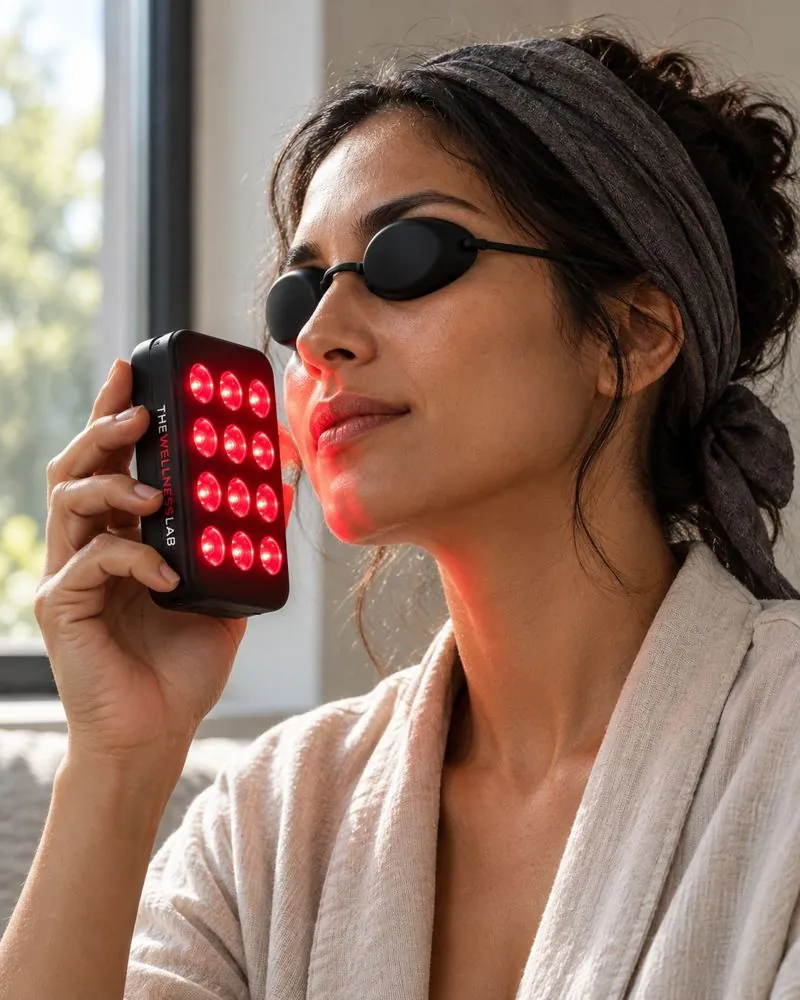
- 01Check your acne type firstThe evidence covers mild to moderate acne. Painful cysts, scarring or sudden adult breakouts need a dermatologist.
- 02Cleanse and dry the skinRemove makeup and sunscreen so nothing sits between the light and your skin.
- 03Put the goggles onFace sessions put the LEDs close to your eyes. Goggles come with every REX panel; never look into the light.
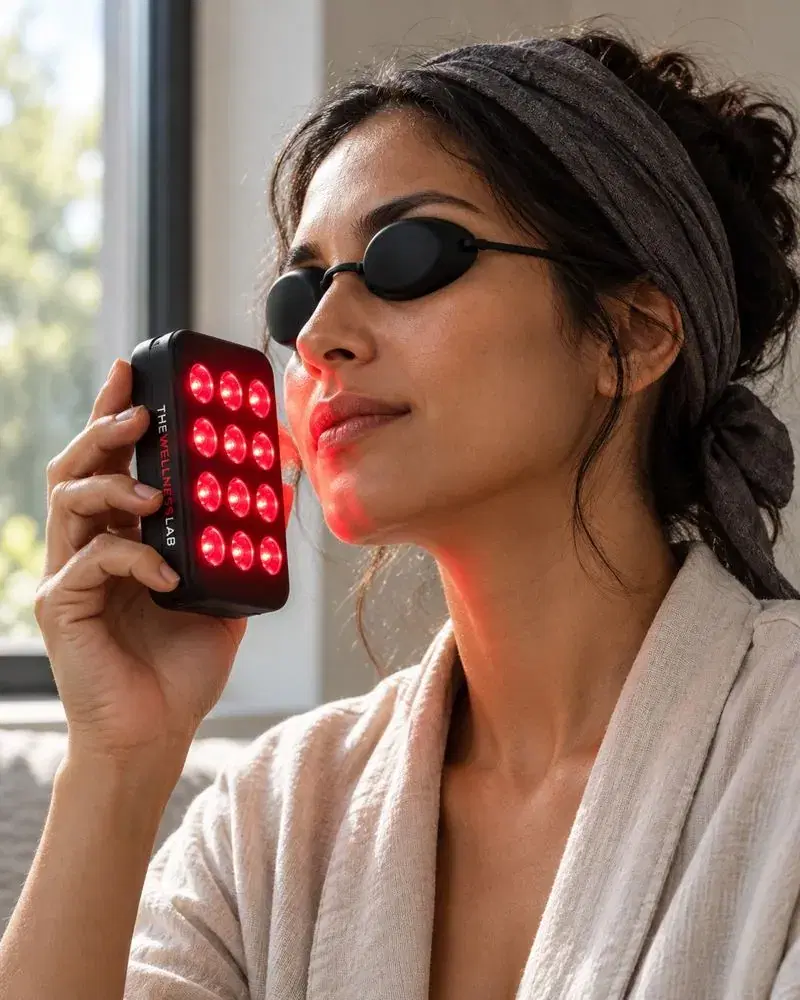
- 04Keep to the routineREX panels: face the panel twice a day, 15 to 25 minutes a session. REX MINI: hold it close and move across the cheeks, chin and forehead.
- 05Keep your skincare goingSome acne creams and tablets make skin more sensitive to light, so ask your doctor or pharmacist before you add a device.
- 06Track it for 12 weeksTrials saw changes between 4 and 12 weeks. Take a photo in the same light each week, and stop if your skin gets irritated or breaks out more.
Which REX is right for acne-prone skin?
REX MINI for spot areas like the jawline, REX ULTRA for the whole face, REX PRO for face, chest and back together.
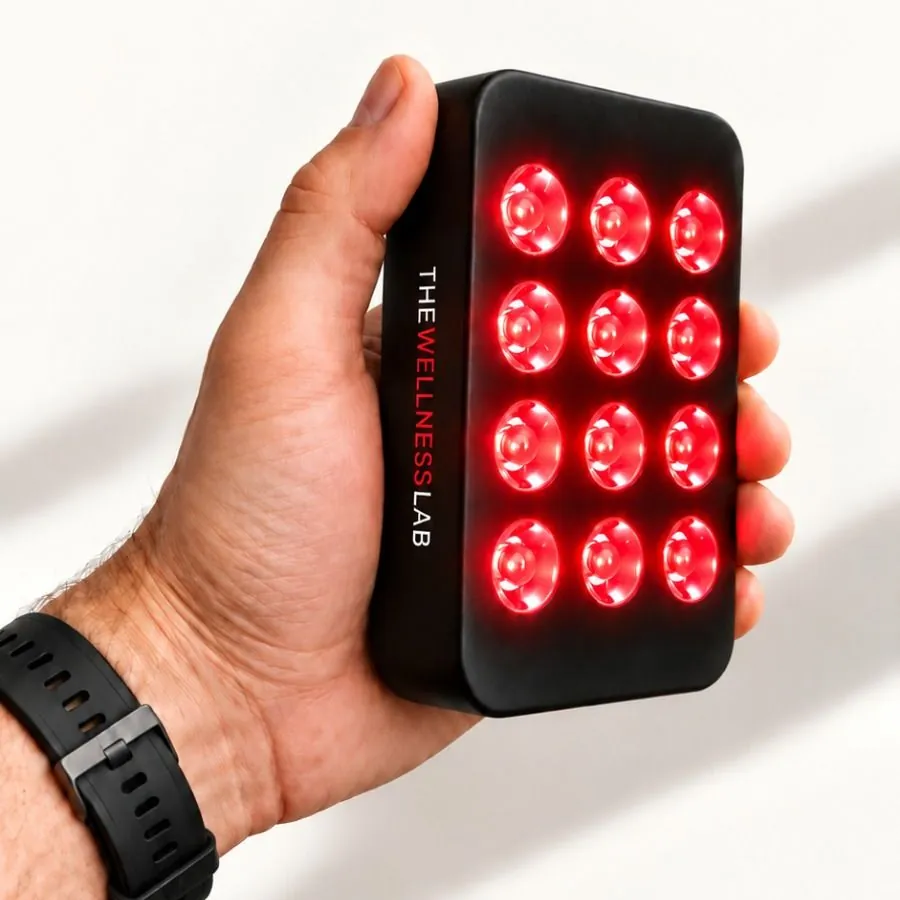
24 LEDs, 660 and 850 nm
Jawline, chin or forehead, one area at a time.
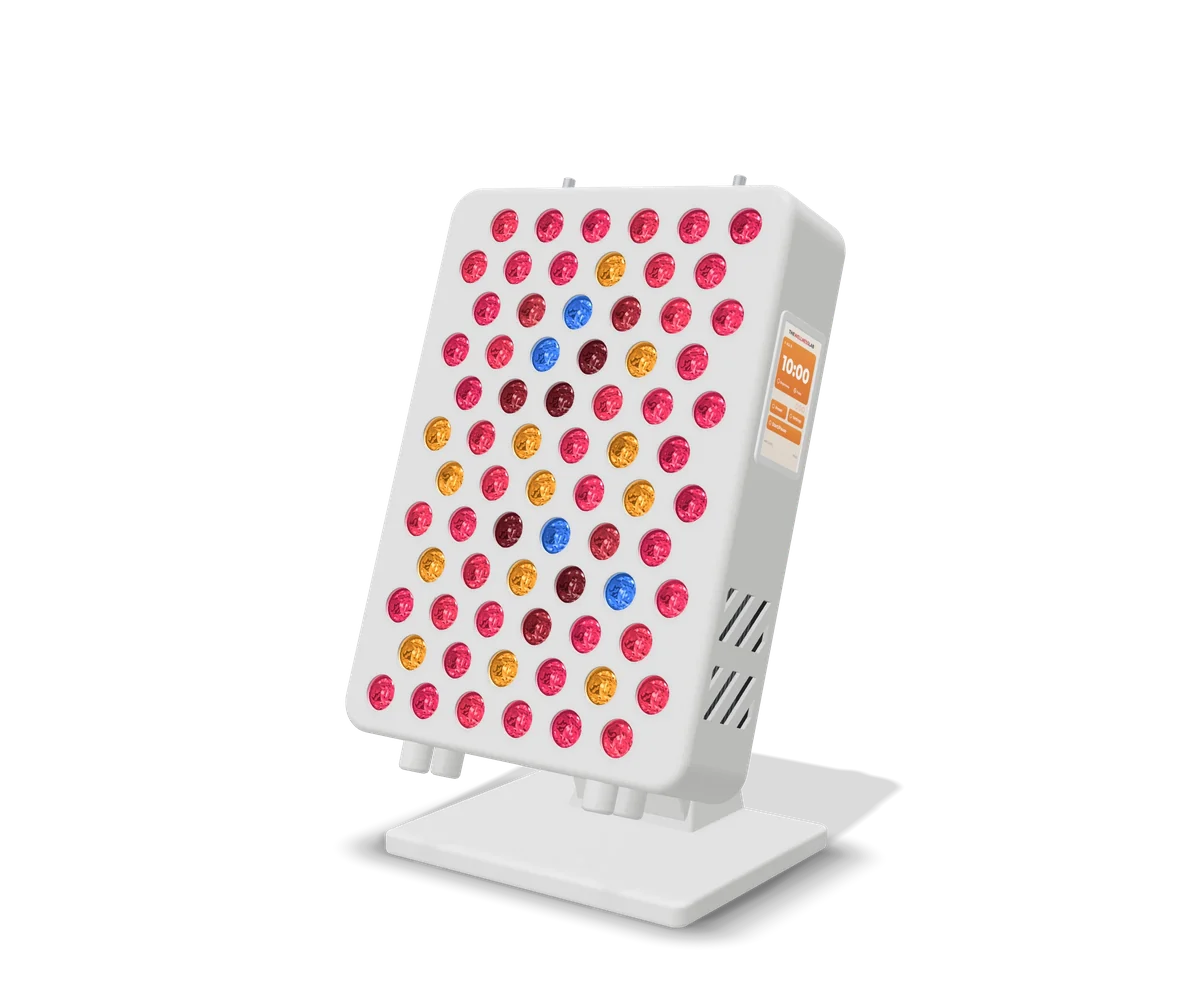
72 LEDs, 9 wavelengths, tilting desk stand
The whole face at once, hands free.
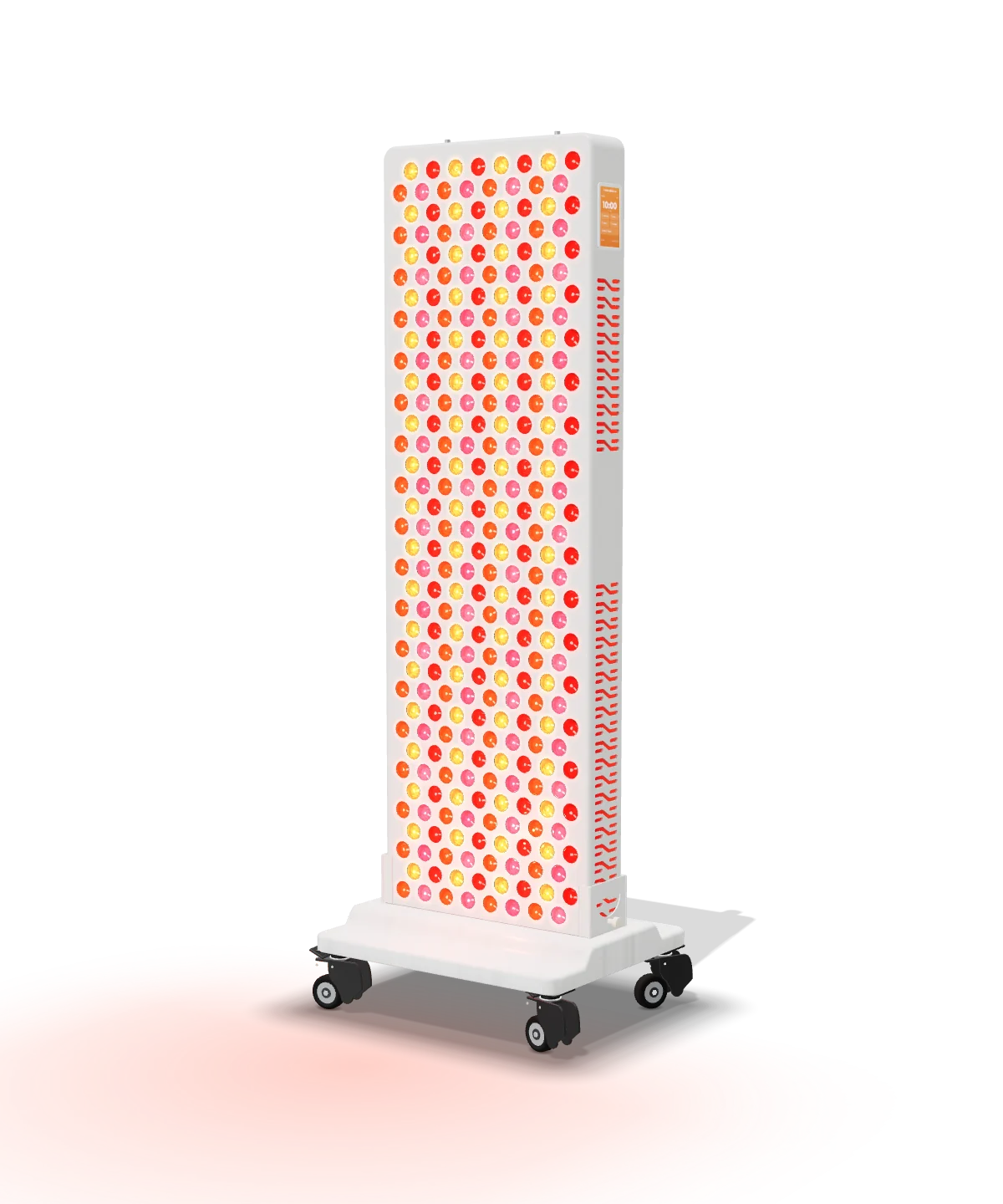
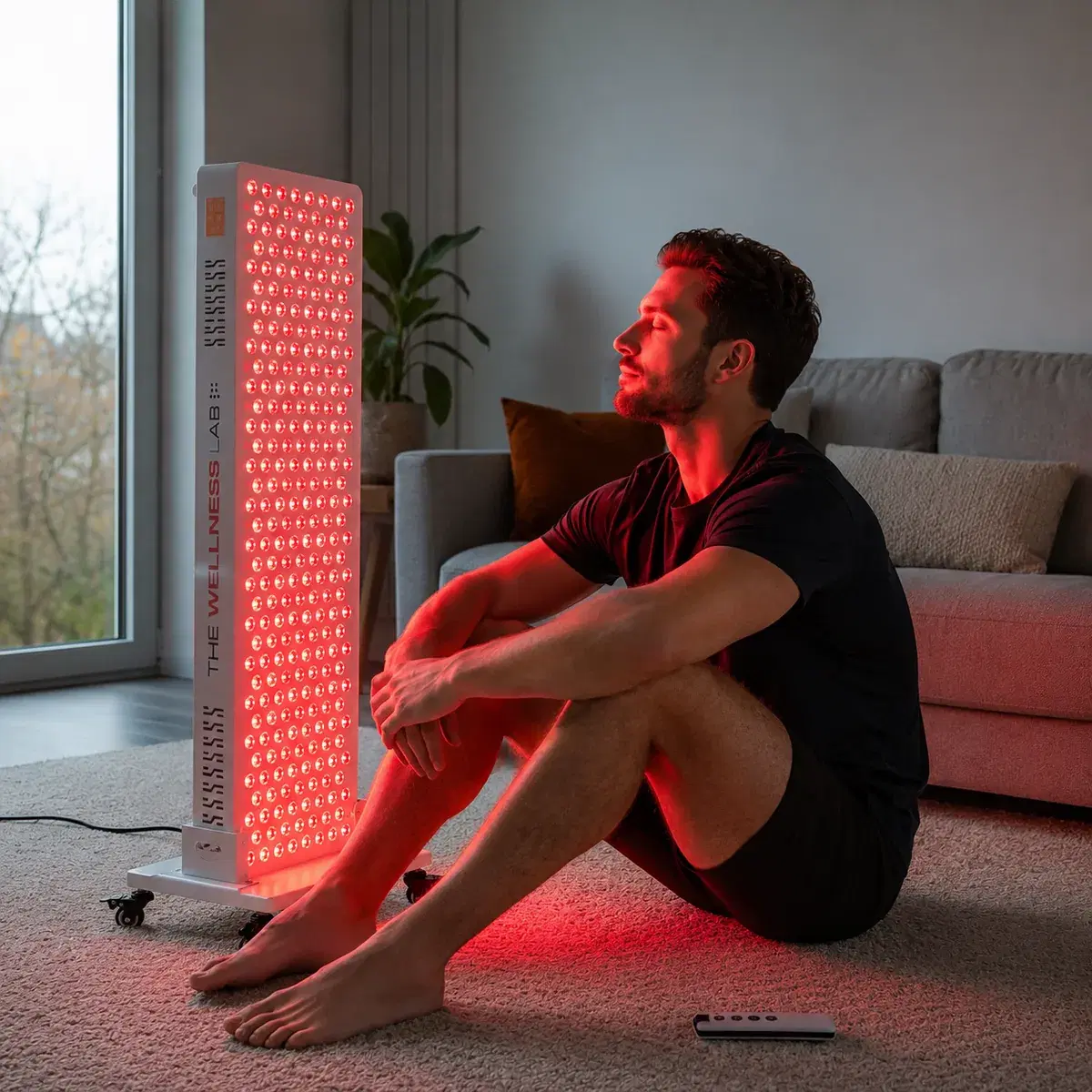
288 LEDs, 9 wavelengths, wheeled floor stand
Face, chest and back in one session.
Delivery is free across the UAE, and our team installs panels for you. Not sure which fits? Take the product quiz or book a 15-minute demo on WhatsApp: +971 58 586 5195.
When should you see a dermatologist about acne?
Before you rely on any device, see a dermatologist if:
- !you have deep, painful lumps or cysts
- !your acne is leaving scars or dark marks
- !breakouts started suddenly in adulthood
- !over-the-counter products haven't helped after a few months
Check with your doctor before using any light device if you take medicine that makes your skin sensitive to light, have a light-sensitivity condition, or are unsure whether it suits you. Our guide is red light therapy safe? covers eyes, skin and precautions.
Frequently asked questions
How long does red light therapy take to work on acne?
In the 2025 review, improvement was typically seen after 4 to 12 weeks of use. Give a steady routine at least 12 weeks before you judge it. Results vary from person to person.
Is red or blue light better for acne?
Both helped in the trials, and combined red and blue looked strongest, though that rests on one trial. REX devices use red and near-infrared light, not the 414 to 445 nm blue used in the acne trials.
Can red light therapy replace my acne cream?
No. The 2024 AAD guideline gives its strong recommendations to benzoyl peroxide, topical retinoids, topical antibiotics and oral doxycycline. Use light alongside your skincare, and ask your doctor before changing anything prescribed.
Does red light therapy help acne scars?
The acne trials didn't measure scars or dark marks, so this evidence doesn't answer that. For skin texture more broadly, see our guide to red light therapy panels for skin.
Does red light therapy for acne have side effects?
No severe side effects were reported in the 6 trials. A few people had mild dryness, redness, a burning feeling or a short-lived flare. Stop if your skin reacts and check with a doctor.
Can I use red light therapy on my face every day?
The REX panel routine is twice a day, 15 to 25 minutes a session, with goggles on. That is our product guidance, not a medical prescription, so follow your model's instructions and your doctor's advice.
A promising add-on for mild to moderate acne, not a replacement for skincare
Small trials, encouraging results, 4 to 12 weeks of consistency, and proven skincare as the foundation. Start with REX MINI for spot areas, or compare the full REX range.
Shop REX MINI Compare REX WhatsApp demoSources
- Ershadi S, Barbieri JS. At-Home LED Devices for the Treatment of Acne Vulgaris: A Systematic Review and Meta-Analysis. JAMA Dermatology, 2025; 161(5): 552 to 555. doi.org/10.1001/jamadermatol.2025.0019
- Reynolds RV, et al. Guidelines of care for the management of acne vulgaris. Journal of the American Academy of Dermatology, 2024; 90(5): 1006.e1 to 1006.e30. doi.org/10.1016/j.jaad.2023.12.017